
Written and reviewed as a literature-based educational guide by Dr. Akbar Zaib, PhD in Neurosciences.
Do you feel lightheaded, weak, unsteady, or close to fainting when you get out of bed or rise from a chair? Blood pressure changes in Parkinson’s disease can temporarily reduce blood flow to the brain after standing, causing a problem known as orthostatic hypotension. Although Parkinson’s disease may affect the body’s automatic control of blood pressure, medications, dehydration, meals, and other health conditions can also contribute — so persistent dizziness should be properly assessed rather than simply accepted as part of the disease.

In Parkinson’s disease, dizziness after standing is often associated with a sudden fall in blood pressure called orthostatic hypotension. Parkinson’s can affect the autonomic nervous system, which normally adjusts blood pressure automatically when the body changes position. However, the condition itself is not the only possible explanation. Dehydration, medications, meals, heat, and other medical conditions may also contribute.
In this guide, we explain why blood pressure changes occur in Parkinson’s disease, which symptoms to watch for, how the problem is assessed, what may make it worse, and the practical steps and treatments that can help you manage it more safely.
What happens to blood pressure when you stand up?
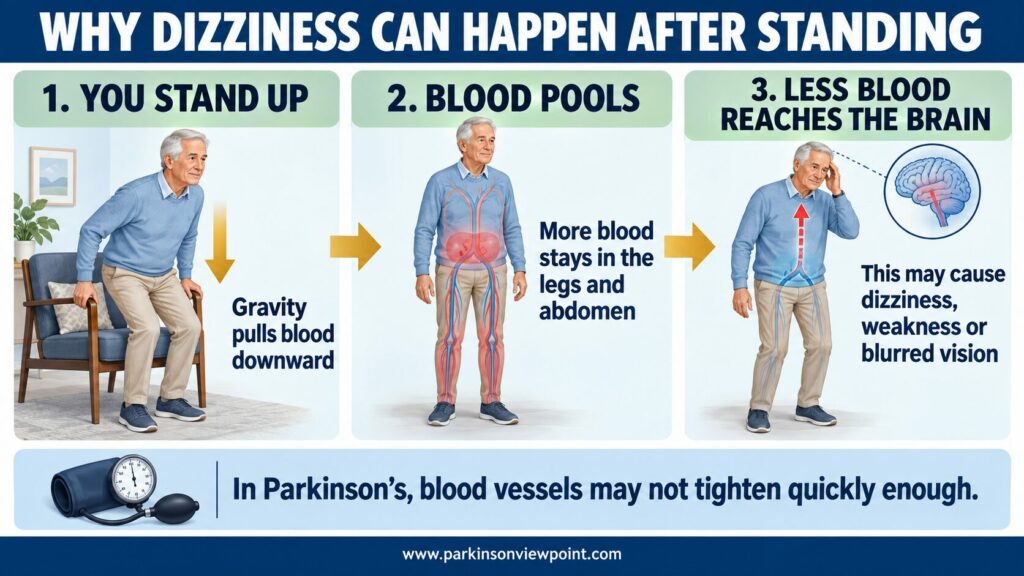
When you stand, gravity causes some blood to collect temporarily in your legs and abdomen. This reduces the amount of blood returning to the heart and can briefly decrease the blood available to the brain.
The body normally corrects this change within seconds. Pressure-sensitive receptors in the blood vessels detect the drop and signal the autonomic nervous system to:
- Narrow the blood vessels
- Slightly increase the heart rate
- Maintain blood flow to the heart and brain
Most people do not notice this automatic adjustment. In Parkinson’s disease, however, the nerves controlling these responses may not work efficiently. The blood vessels may fail to tighten enough, and the heart rate may not increase sufficiently to compensate. As a result, blood pressure remains too low after standing.
A sustained decrease of at least 20 mmHg in systolic blood pressure or 10 mmHg in diastolic blood pressure within three minutes of standing is generally defined as orthostatic hypotension, also known as postural hypotension [1]. When this happens because the nervous system cannot regulate blood pressure properly, it is called neurogenic orthostatic hypotension.
Reduced blood flow to the brain can then produce symptoms such as dizziness, blurred vision, weakness, confusion, or feeling close to fainting. Symptoms often improve after sitting or lying down because blood can reach the brain more easily again.
Research suggests that orthostatic hypotension affects approximately 30% of people with Parkinson’s disease, although estimates vary according to the population studied and the method used to measure blood pressure [2]. Importantly, some people experience a meaningful blood-pressure drop without feeling noticeably dizzy, which is why symptoms alone may not reveal the problem.
Why is orthostatic hypotension common in Parkinson’s disease?
Parkinson’s disease is best known for movement symptoms, but it can also affect the autonomic nervous system. This system regulates functions that happen without conscious effort, including blood pressure, heart rate, digestion, sweating, and bladder control.
In some people with Parkinson’s disease, disease-related changes damage the sympathetic nerves that help release norepinephrine, a chemical messenger involved in tightening blood vessels. When norepinephrine signalling is reduced, the blood vessels may not constrict adequately after standing. Blood remains pooled in the lower body, less blood returns to the heart, and blood pressure falls. This is the basis of neurogenic orthostatic hypotension [3].
Parkinson’s-related autonomic dysfunction can also limit the normal increase in heart rate that should occur when blood pressure drops. Therefore, the body may be unable to correct the fall quickly enough.
However, dizziness is often caused by several factors acting together. These may include:
- Parkinson’s-related autonomic dysfunction
- Dehydration or insufficient fluid intake
- Blood-pressure-lowering medications
- Some Parkinson’s medications
- Prolonged sitting or bed rest
- Anemia, infection, or recent illness
- Heart or blood-vessel conditions
- Age-related changes in blood-pressure regulation
Orthostatic hypotension may occur at different stages of Parkinson’s disease, although it tends to become more frequent as the disease progresses and as medication regimens become more complex. Its presence does not necessarily mean that Parkinson’s disease is suddenly worsening. It does, however, deserve attention because the underlying causes may be treatable or manageable.
A healthcare professional should assess the full picture rather than assuming that every episode is caused directly by Parkinson’s disease. This usually includes reviewing symptoms, blood-pressure readings, medications, fluid intake, recent illnesses, and other medical conditions.
Signs that your blood pressure may be dropping
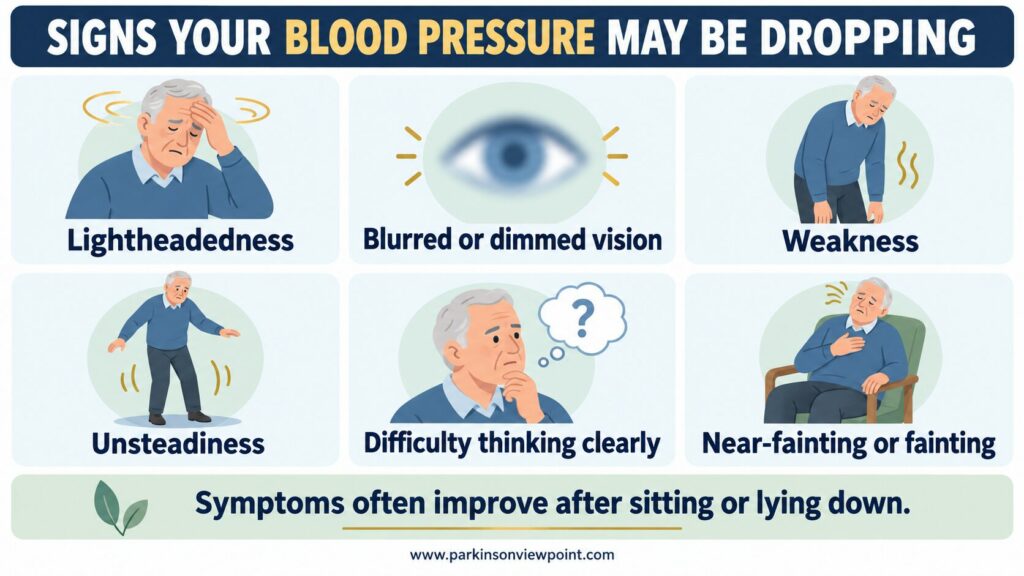
Orthostatic hypotension does not feel the same for everyone. Symptoms usually appear after standing up, remaining upright for a long time, or walking, and often improve after sitting or lying down.
Possible signs include:
- Lightheadedness or a “floating” sensation
- Feeling weak, shaky, or close to fainting
- Blurred, dimmed, or tunnel-like vision
- Unsteadiness or sudden loss of balance
- Difficulty concentrating or thinking clearly
- Unusual fatigue while standing or walking
- Headache
- Aching across the neck and shoulders, sometimes called “coat-hanger pain”
- Shortness of breath or chest discomfort
- Fainting in more severe cases
Some people do not describe the sensation as dizziness. Instead, they may say that their legs suddenly feel weak, their head feels “foggy,” or they cannot remain standing for long. A person may also slow down, freeze, or appear less responsive, causing the episode to be mistaken for a Parkinson’s OFF period.
It is also important to distinguish lightheadedness from vertigo. Orthostatic hypotension usually causes faintness, weakness, or dimmed vision. Vertigo creates a sensation that you or the room is spinning and may indicate an inner-ear or vestibular problem rather than a blood-pressure drop.
Not everyone with orthostatic hypotension notices symptoms. Research has shown that some people with Parkinson’s disease have a clinically significant fall in blood pressure without reporting dizziness [4]. For this reason, unexplained falls, reduced walking tolerance, or sudden cognitive slowing while upright may justify checking both lying and standing blood pressure—even when the person does not feel obviously lightheaded.
However, dizziness is only one possible cause of falling. Our guide explains why backward falls happen in Parkinson’s and covers postural instability, freezing, turning and other common triggers.
What can make the dizziness worse?
Blood pressure changes in Parkinson’s disease often vary from one day—or even one hour—to the next. A person may feel well at one time and become lightheaded later because several factors can worsen the underlying problem.
Getting up too quickly
Moving suddenly from lying or sitting to standing gives the body less time to adjust. Symptoms may be particularly noticeable when getting out of bed in the morning or standing after sitting for a long period.
Dehydration
Not drinking enough, excessive sweating, vomiting, diarrhoea, fever, or frequent urination can reduce circulating blood volume. This makes it harder to maintain blood pressure when upright. Some people with Parkinson’s disease intentionally limit fluids because of bladder urgency, which can unintentionally worsen dizziness.
Large or carbohydrate-rich meals
Blood is redirected toward the digestive system after eating. In people with impaired autonomic regulation, this can cause postprandial hypotension, meaning a fall in blood pressure after a meal. Symptoms may be more noticeable after large meals or meals rich in rapidly absorbed carbohydrates.
Heat
Hot weather, warm rooms, hot baths, and showers widen blood vessels and may lower blood pressure. Standing in a hot environment can therefore make lightheadedness and weakness worse.
Alcohol
Alcohol can widen blood vessels and contribute to dehydration, both of which may increase the likelihood of a blood-pressure drop.
Physical exertion
Blood pressure may fall after exercise because the blood vessels remain widened while the muscles stop helping pump blood back toward the heart. Exercise remains important in Parkinson’s disease, but the type, intensity, hydration, and cool-down period may need to be adjusted.
Medications
Levodopa, dopamine agonists, and some other Parkinson’s disease treatments may lower blood pressure in certain people. A number of other commonly prescribed medications can also contribute, including those used for high blood pressure, heart conditions, and certain psychiatric or urological conditions.
This does not mean that prescribed medication should be stopped. Sudden changes — particularly to Parkinson’s medication — can be harmful. Instead, record when symptoms occur in relation to medication doses, meals, and activities, and ask a doctor or pharmacist to review the complete medication list.
Track Patterns Between Appointments
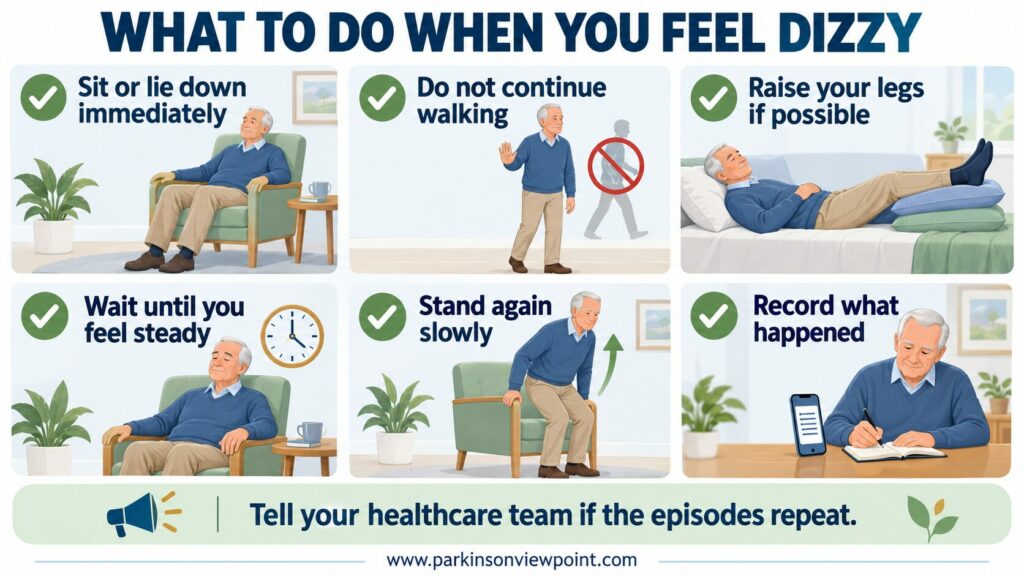
Dizziness may not happen during a medical appointment, so recording when it occurs can help your healthcare team understand the pattern. Note whether the episode happened after standing, a meal, exercise, a hot shower, or a medication dose. You can also record how long it lasted, whether you nearly fell, and what helped it improve.
The free Parkinson’s Daily Diary App lets you record daily symptoms, medication status, and notes in under one minute. You can use the notes section to document episodes of dizziness and relevant blood-pressure readings, then generate a doctor-ready report for your next appointment.
Start tracking your daily Parkinson’s symptoms:
www.parkinsondailydiary.com
The app can help you record patterns, but it does not diagnose orthostatic hypotension or replace clinical blood-pressure assessment.
How is orthostatic hypotension diagnosed?
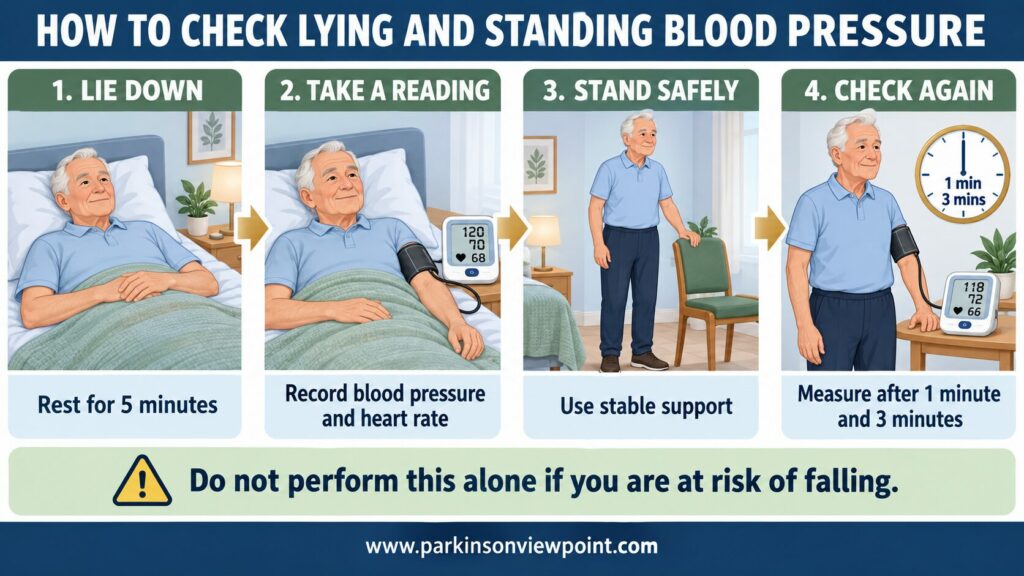
A healthcare professional can often identify orthostatic hypotension by measuring blood pressure and heart rate before and after standing. A commonly recommended method is:
- Lie flat and rest for at least five minutes.
- Measure blood pressure and heart rate while lying down.
- Stand up carefully, with assistance if there is a risk of falling.
- Repeat the measurements after one minute and again after three minutes.
A sustained drop of at least 20 mmHg in systolic pressure or 10 mmHg in diastolic pressure within three minutes supports a diagnosis of orthostatic hypotension [1]. Heart rate is also important. In neurogenic orthostatic hypotension, blood pressure may fall substantially while the heart rate increases only slightly because the autonomic response is impaired [3].
A single normal reading does not always exclude the condition. Blood pressure can vary with the time of day, meals, hydration, medication timing, temperature, and activity. Some people also experience delayed orthostatic hypotension, in which the significant drop occurs after standing for more than three minutes. If symptoms continue despite normal routine measurements, a doctor may recommend longer standing measurements, 24-hour blood-pressure monitoring, or a tilt-table test [5].
Keeping a brief record can help. Note:
- The blood-pressure and heart-rate readings
- When the dizziness occurred
- Whether you had just stood up, eaten, exercised, or showered
- Recent fluid intake
- Parkinson’s disease and other medication times
- Whether sitting or lying down relieved the symptoms
Do not attempt a standing test alone if you have previously fainted, fallen, or feel very unsteady. Home readings can reveal useful patterns, but they should support — not replace — a clinical assessment.
Practical steps that may reduce dizziness
Management usually begins with identifying triggers and making daily adjustments. The aim is not necessarily to produce a “perfect” blood-pressure reading, but to reduce symptoms, prevent fainting and falls, and help the person remain safely active [3].
1. Pause before standing
Move in stages rather than standing in one motion. Sit on the edge of the bed or chair for a short time, move your feet and ankles, and then rise slowly while holding a stable support. Wait until you feel steady before walking.
Building this pause into a consistent daily routine for Parkinson’s disease may make mornings and other changes in position safer.
2. Sit or lie down when symptoms begin
Do not try to “push through” sudden dizziness. Sit down immediately or lie flat if possible. Raising the legs may help blood return toward the heart. If you cannot sit, crossing your legs, tightening your thigh and buttock muscles, or clenching your fists may temporarily support blood pressure [5].
3. Maintain adequate fluid intake
Dehydration can make orthostatic hypotension worse. Your healthcare team may recommend regular fluid intake throughout the day. Some people experience a temporary rise in blood pressure after rapidly drinking approximately 500 mL of water, but the appropriate amount depends on individual health [5].
People with heart failure, kidney disease, significant swelling, or a prescribed fluid restriction should not increase their intake without medical advice.
4. Discuss salt intake with your doctor
Additional dietary salt may help the body retain fluid and support blood pressure in some people. However, it is not appropriate for everyone, particularly those with heart or kidney problems, swelling, or high blood pressure while lying down. Ask for individual guidance rather than increasing salt independently.
5. Adjust meals
If dizziness occurs after eating, try smaller, more frequent meals instead of one large meal. Reducing very large portions of rapidly absorbed carbohydrates may also help limit post-meal blood-pressure drops.
6. Reduce heat exposure
Keep rooms comfortably cool, avoid very hot baths and showers, and take extra care during warm weather. A shower chair may improve safety if heat and prolonged standing trigger symptoms.
You may also consider these simple home adjustments for Parkinson’s disease to reduce fall risks in the bathroom, bedroom, and other frequently used areas.
7. Consider abdominal compression
An abdominal binder can reduce blood pooling in the abdomen and may be easier to use than full-length compression stockings. Compression garments must fit properly, and stiffness or reduced hand movement may make them difficult to put on. A physiotherapist, occupational therapist, or nurse can help identify a practical option.
8. Raise the head of the bed
For selected people, sleeping with the head and upper body elevated may help reduce overnight fluid shifts and morning symptoms. This should be discussed with a healthcare professional, especially when low standing blood pressure occurs alongside high blood pressure while lying down.
When medication may be needed
If practical measures are not enough and dizziness continues to interfere with standing, walking, or daily activities, a doctor may consider medication. Treatment should be individualized because raising blood pressure while standing can also cause high blood pressure while lying down, known as supine hypertension.
Medicines that may be considered include:
- Midodrine: Tightens blood vessels and can improve standing blood pressure. Because it may raise blood pressure while lying down, it is generally taken during waking hours and not close to bedtime.
- Droxidopa: Is converted into norepinephrine in the body and may improve symptoms of neurogenic orthostatic hypotension. Blood pressure must be monitored because supine hypertension can occur.
- Fludrocortisone: Helps the body retain salt and water, increasing circulating blood volume. It requires careful monitoring for swelling, low potassium, worsening heart problems, and high blood pressure.
- Pyridostigmine: May be considered in selected cases, sometimes alongside another treatment. Its effect on blood pressure is generally modest.
The choice depends on the person’s symptoms, standing and lying blood-pressure readings, medication schedule, heart and kidney health, fall risk, and other medical conditions [3,5].
Before adding a new medicine, the healthcare team should review existing prescriptions. In some cases, adjusting the dose or timing of a blood-pressure medicine, Parkinson’s disease treatment, diuretic, antidepressant, or medication for urinary symptoms may reduce dizziness. However, the benefits of each medicine must be weighed against its effect on blood pressure.
Never stop or change Parkinson’s or blood-pressure medication on your own. Sudden changes can worsen symptoms or cause other complications. Any adjustment should be planned with the prescribing healthcare professional and followed by repeat lying and standing blood-pressure measurements.
The challenge of low standing and high lying blood pressure
Some people with Parkinson’s disease and neurogenic orthostatic hypotension also develop supine hypertension — high blood pressure while lying flat. This creates a difficult pattern: blood pressure may be too low when standing but too high when resting or sleeping.
Supine hypertension often causes no obvious symptoms, so it may only be detected through home readings or 24-hour blood-pressure monitoring. It matters because treatments that raise standing blood pressure can make lying blood pressure even higher. High pressure overnight may also increase urine production, contributing to fluid loss and worse dizziness the following morning [3].
To manage this balance, a healthcare professional may recommend:
- Checking blood pressure in both standing and lying positions
- Avoiding lying completely flat during the day after taking blood-pressure-raising medication
- Taking the final dose of medicines such as midodrine or droxidopa several hours before bedtime
- Sleeping with the head and upper body elevated
- Reviewing evening fluid, meal, and medication timing
- Using carefully selected short-acting treatment at night in severe cases
Treatment decisions should focus on symptoms, safety, and the person’s overall cardiovascular risk rather than one isolated reading. This is another reason not to manage orthostatic hypotension simply by increasing salt, fluid, or medication without professional guidance.
When to contact a healthcare professional
Arrange a routine appointment if dizziness after standing is new, becoming more frequent, affecting your walking, or making you afraid to stand or move independently. Also report unexplained falls, near-fainting, cognitive slowing while upright, or symptoms that began after a medication change.
Before the appointment, record when the episodes occur, what you were doing, and whether they relate to meals, heat, exercise, or medication timing. If possible and safe, bring several lying and standing blood-pressure and heart-rate readings. This information can help your healthcare team distinguish orthostatic hypotension from an OFF period, vertigo, dehydration, medication effects, or another condition.
Seek urgent medical attention if dizziness occurs with:
- Fainting, particularly with an injury
- Chest pain, severe shortness of breath, or an irregular heartbeat
- A sudden severe headache
- New facial weakness, arm weakness, difficulty speaking, or confusion
- Persistent dizziness that does not improve after sitting or lying down
- Signs of significant bleeding, severe dehydration, or serious illness
Do not assume that sudden or severe dizziness is simply part of Parkinson’s disease. New neurological symptoms may indicate a stroke, while chest symptoms or repeated fainting may signal a cardiovascular problem requiring prompt assessment.
Key takeaways
Feeling dizzy when you stand is common in Parkinson’s disease, but it should not be ignored. A frequent cause is orthostatic hypotension — a fall in blood pressure that occurs because the body cannot adjust quickly enough to an upright position. Parkinson’s-related autonomic changes may contribute, but dehydration, meals, heat, medication, and other health conditions can make symptoms worse.
Standing up gradually, maintaining appropriate hydration, adjusting meal size, avoiding excessive heat, and recording symptom patterns may help. Some people also benefit from compression garments or prescribed medication. However, treatment must be personalized, particularly when low standing blood pressure occurs alongside high blood pressure while lying down.
Most importantly, report recurrent dizziness, near-fainting, or unexplained falls to your healthcare team. Measuring blood pressure in different positions and reviewing your medications can help identify the cause and guide safer, more effective management.
Medical disclaimer
This article is for educational purposes only and is not a substitute for medical advice, diagnosis, or treatment. Dizziness and blood-pressure changes can have several causes, some of which may require urgent assessment. Speak with your doctor, neurologist, or other qualified healthcare professional before changing your medication, fluid intake, salt intake, compression garments, or treatment plan. Seek urgent medical care for fainting, chest pain, severe shortness of breath, or sudden neurological symptoms.
References
[1]. Freeman R, Wieling W, Axelrod FB, et al. Consensus statement on the definition of orthostatic hypotension, neurally mediated syncope and the postural tachycardia syndrome. Clinical Autonomic Research. 2011;21(2):69–72. https://doi.org/10.1007/s10286-011-0119-5
[2]. Velseboer DC, de Haan RJ, Wieling W, Goldstein DS, de Bie RMA. Prevalence of orthostatic hypotension in Parkinson’s disease: a systematic review and meta-analysis. Parkinsonism & Related Disorders. 2011;17(10):724–729. https://doi.org/10.1016/j.parkreldis.2011.04.016
[3]. Palma JA, Kaufmann H. Orthostatic hypotension in Parkinson disease. Clinics in Geriatric Medicine. 2020;36(1):53–67. https://doi.org/10.1016/j.cger.2019.09.002
[4]. Palma JA, Gomez-Esteban JC, Norcliffe-Kaufmann L, et al. Orthostatic hypotension in Parkinson disease: how much you fall or how low you go? Movement Disorders. 2015;30(5):639–645. https://doi.org/10.1002/mds.26079
[5]. Gibbons CH, Schmidt P, Biaggioni I, et al. The recommendations of a consensus panel for the screening, diagnosis, and treatment of neurogenic orthostatic hypotension and associated supine hypertension. Journal of Neurology. 2017;264(8):1567–1582. https://doi.org/10.1007/s00415-016-8375-x