
Neuroscientist • Parkinson’s Researcher
Many people expect Parkinson’s disease to affect movement, but they’re often surprised when their thinking begins to slow down too. Slow thinking in Parkinson’s disease can make conversations, decision-making, and everyday tasks feel more mentally demanding than they once did. The good news is that understanding why this happens — and learning simple strategies to work with your brain rather than against it — can help you stay confident, independent, and mentally engaged.

One of the lesser-known symptoms of Parkinson’s disease is slow thinking, also known as cognitive slowing or bradyphrenia. It doesn’t mean you’ve become less intelligent or that you have dementia. Instead, your brain may simply need a little more time to process information, switch between tasks, or respond during conversations.
For some people, this change is subtle. Others notice that planning daily activities, following complex instructions, or finding the right words becomes more challenging, especially when they’re tired or their medication isn’t working at its best. These changes can be frustrating, but they’re also a recognized part of Parkinson’s disease for many people.
In this article, we’ll explain why slow thinking in Parkinson’s disease happens, the signs to look out for, and practical, evidence-based ways to stay mentally active and manage these changes in everyday life.
Disclaimer: The information shared here should not be taken as medical advice. The opinions presented here are not intended to treat any health conditions. For your specific medical problem, consult with your healthcare provider.
What does “slow thinking” mean?
Imagine your brain as a computer. The information is still there, but the processor isn’t working as quickly as it once did. That’s a simple way to understand slow thinking, or bradyphrenia, in Parkinson’s disease.
Slow thinking doesn’t mean you’ve forgotten something or lost your ability to think. Instead, it means your brain needs a little more time to process information and respond. Many people describe it as feeling as though there’s a slight delay between hearing a question and finding the answer.
You might notice that you:
- Take longer to answer questions during conversations.
- Need extra time to make everyday decisions.
- Find it harder to switch from one task to another.
- Lose your train of thought more easily when interrupted.
- Need more time to plan activities or solve problems.
- Feel mentally slower, particularly later in the day.
These changes can be frustrating, but they don’t affect everyone in the same way. Some people only notice them occasionally, while others experience them more regularly, particularly as Parkinson’s disease progresses.
It’s also important to understand that slow thinking is not the same as dementia. Many people with Parkinson’s disease experience cognitive slowing while their memory, personality, and understanding remain largely intact. Your brain is still capable—it simply needs a little more time to process information.
Just as Parkinson’s disease can slow physical movements, it can also slow the speed at which your brain processes thoughts. Recognizing this difference can help reduce unnecessary worry and make it easier to develop strategies that support your daily life.
Why does Parkinson’s disease cause slow thinking?
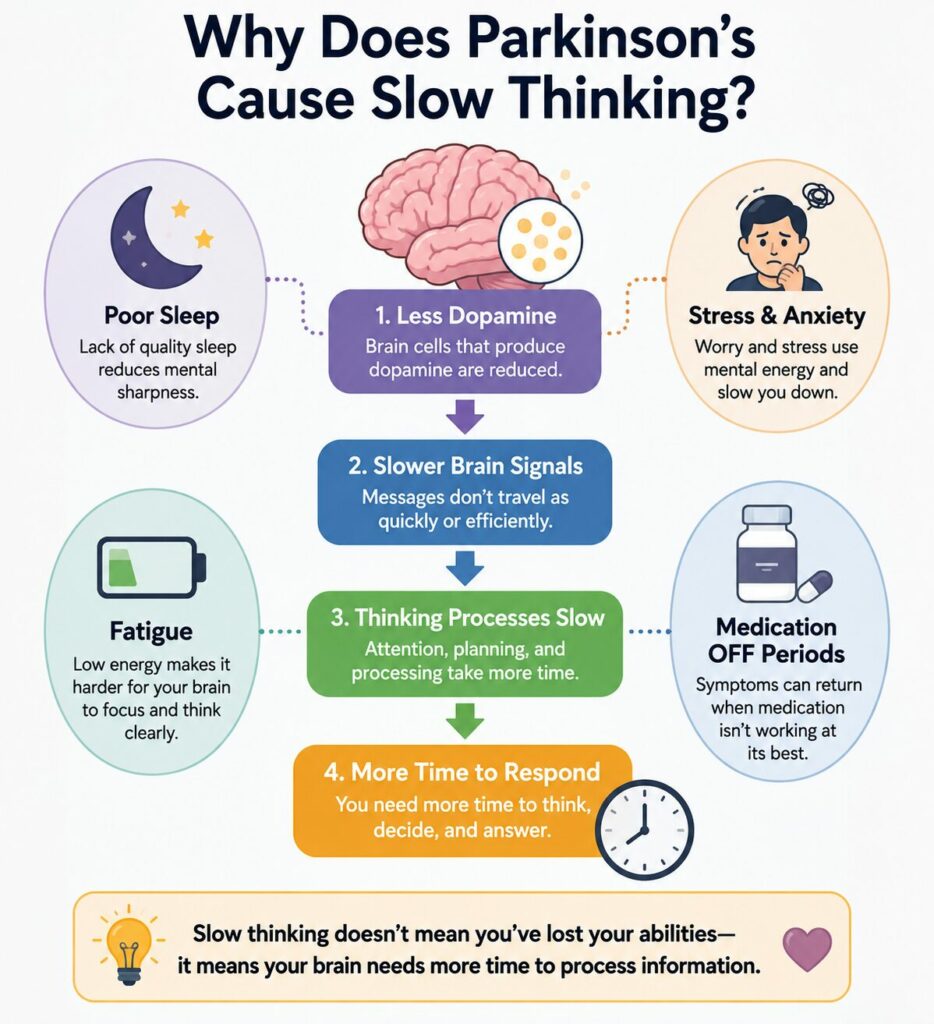
To understand slow thinking in Parkinson’s disease, it helps to know that the disease affects much more than movement. The same brain changes that make it harder to walk, write, or button a shirt can also affect how quickly your brain processes information.
The main reason is the gradual loss of brain cells that produce dopamine, a chemical messenger that helps different parts of the brain communicate efficiently. Most people know dopamine is important for controlling movement, but it also plays a vital role in attention, planning, decision-making, and processing speed.
As dopamine levels decrease, messages travel less efficiently through the brain. Instead of thoughts flowing quickly and smoothly, they may take longer to organize and process. This doesn’t mean the information is gone—it simply takes more time for your brain to retrieve and respond.
Think of it like driving during rush hour. The roads are still open, and you’ll eventually reach your destination, but traffic slows the journey. In a similar way, the brain can still complete many mental tasks, but it often needs more time.
However, dopamine isn’t the whole story. Several other factors can make thinking feel even slower, including:
- Fatigue, which reduces mental energy and concentration.
- Poor sleep, making it harder to stay focused during the day.
- Medication “OFF” periods, when Parkinson’s disease symptoms temporarily become more noticeable.
- Anxiety or stress, which can make it harder to think clearly.
- Depression, which may reduce motivation and slow mental processing.
- Normal aging, which can add to the changes caused by Parkinson’s disease.
This is why your thinking may seem sharper on some days than others. You might notice that you’re mentally quicker after a good night’s sleep or during your best medication “ON” periods, while tiredness or stress can make even simple tasks feel more challenging.
Understanding these factors is important because many of them can be managed. Improving sleep, staying physically active, reducing stress, and working with your healthcare team to optimize medication may all help support clearer thinking and better daily function.
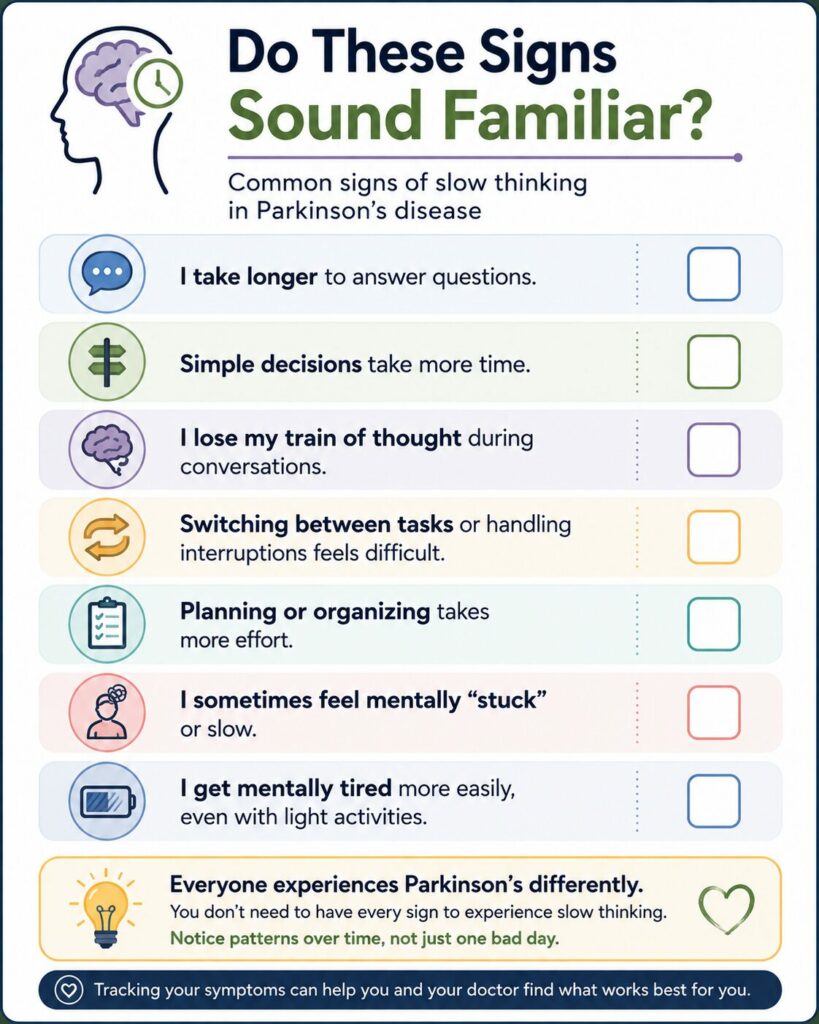
Common signs of slow thinking in Parkinson’s disease
Not everyone with Parkinson’s disease experiences slow thinking in the same way. For some people, the changes are subtle and only appear when they’re tired or under stress. Others notice them more often, especially as the condition progresses. The key is that your brain still works — it simply needs more time to process information.
You may notice that you:
- Take longer to answer questions. You know what you want to say, but it takes a few extra seconds for the words to come.
- Need more time to make decisions. Even simple choices, such as what to wear or what to eat, may take longer than they once did.
- Find it harder to switch between tasks. Moving from one activity to another or handling interruptions can feel mentally demanding.
- Lose your train of thought during conversations. Distractions or interruptions may make it harder to remember what you were about to say.
- Need extra time to plan or organize. Activities that involve several steps—such as preparing a meal or planning a trip—may require more concentration.
- Feel mentally “stuck.” At times, it may seem as though your thoughts are moving more slowly, making it difficult to think quickly or respond in the moment.
- Become mentally tired more easily. Concentrating for long periods can leave you feeling mentally drained, even if you haven’t done much physical activity.
These symptoms often become more noticeable during medication “OFF” periods, after a poor night’s sleep, or when you’re feeling anxious or overwhelmed. On the other hand, many people find they think more clearly during their best medication “ON” periods or after getting enough rest.
Remember, having an occasional slow day doesn’t necessarily mean your Parkinson’s disease is getting worse. Looking for patterns over time is far more helpful than focusing on individual days. Keeping a simple record of when slow thinking occurs can help you and your healthcare team identify possible triggers and decide whether any changes to your routine or treatment might help.
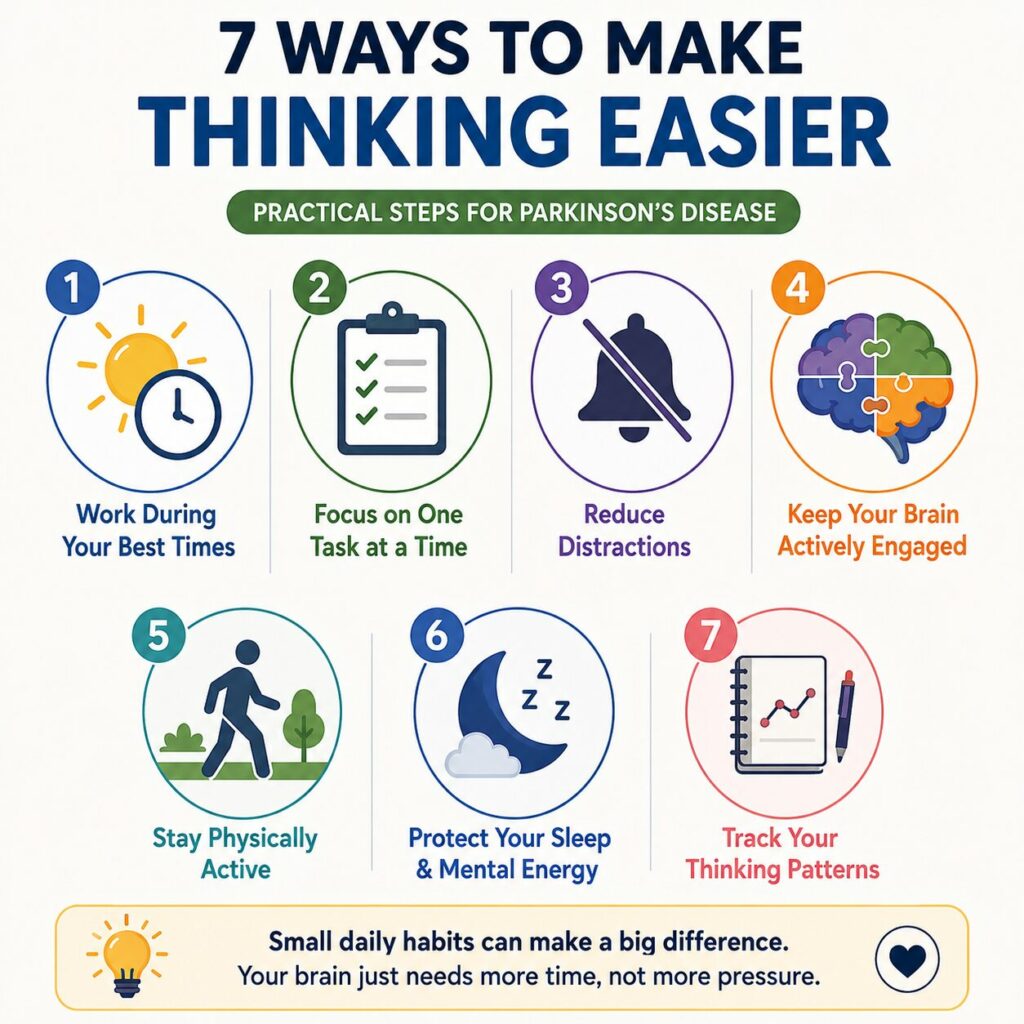
How to stay mentally active and make thinking easier in Parkinson’s disease
Although you cannot always prevent slow thinking in Parkinson’s disease, you can make daily tasks less mentally demanding. The goal is not to force your brain to work faster. It is to create the right conditions for it to work at its best.
Work during your clearest times
Pay attention to when you feel most alert. For many people, this may be after resting or during a medication “ON” period. Use these clearer times for activities that require planning, decision-making, paperwork, or important conversations.
Try not to schedule several demanding tasks close together. Leaving space between activities gives your brain time to recover.
Focus on one task at a time
Multitasking places extra pressure on attention and working memory. Instead of trying to cook, answer questions, and check your phone at the same time, finish one step before beginning another.
When completing a complicated activity, write down the steps and follow them one by one. A short checklist can reduce the amount of information you need to hold in your mind.
Reduce distractions
Background television, several people speaking, phone notifications, and clutter can make thinking more difficult. Choose a quiet space for important tasks and conversations.
Family members can help by asking one question at a time and allowing enough time for an answer. Finishing someone’s sentences may feel helpful, but it can create pressure and make communication more frustrating.
Keep your brain meaningfully active
Activities such as reading, puzzles, music, learning a skill, gardening, crafts, and social conversations can help keep your mind engaged. Choose activities you enjoy rather than exercises that feel like a test.
Start with short sessions and take breaks before you become mentally exhausted. Ten focused minutes can be more useful than struggling through an hour when you are tired.
Stay physically active
Regular physical activity supports overall health, mood, sleep, mobility, and quality of life in Parkinson’s disease. Walking, dancing, cycling, stretching, strength exercises, or Parkinson’s-specific classes may all be useful when matched to your abilities. Ask a physiotherapist or healthcare professional for guidance if balance or falls are a concern.
Protect your sleep and mental energy
Poor sleep, fatigue, anxiety, and depression can make concentration and processing speed worse. A regular sleep routine, planned rest breaks, stress-reducing activities, and treatment for mood or sleep problems may help you think more clearly.
Review changes with your healthcare team
Tell your Parkinson’s disease specialist or nurse if thinking changes are becoming more noticeable. Medication timing, side effects, sleep problems, low mood, and other health conditions may contribute. Some medicines can worsen cognitive symptoms, so treatment should be reviewed rather than changed without medical advice. Occupational therapy may also provide practical strategies for managing daily tasks.
Finally, consider keeping a simple record of when slow thinking feels better or worse. Note your medication times, sleep, fatigue, stress, and “ON” or “OFF” periods. Over time, these patterns may help you plan your day and give your healthcare team more useful information.
When should you talk to your doctor?
It’s normal for thinking speed to change from day to day, especially if you’re tired, stressed, or experiencing medication “OFF” periods. However, you should speak with your healthcare team if you notice that your thinking has changed significantly or is beginning to interfere with your daily life.
Consider discussing your symptoms if you:
- Notice a sudden or rapid decline in thinking.
- Struggle to manage everyday tasks that were previously easy.
- Frequently become confused or disoriented.
- Experience hallucinations or major changes in behaviour.
- Feel that your medication is no longer providing consistent benefit.
- Have ongoing sleep problems, anxiety, or depression that may be affecting your concentration.
Your neurologist or Parkinson’s disease nurse can help identify possible causes. Sometimes adjusting medication timing, improving sleep, treating mood symptoms, or referring you to an occupational therapist or speech and language therapist can make a meaningful difference.
The earlier you discuss changes, the easier it is to identify strategies that may help you stay independent and maintain your quality of life.
Key takeaways
- Slow thinking is a common non-motor symptom of Parkinson’s disease.
- It doesn’t mean you’ve lost your intelligence or automatically have dementia.
- Dopamine loss, fatigue, poor sleep, stress, and medication “OFF” periods can all contribute to slower thinking.
- Simple strategies—such as working during your best “ON” times, focusing on one task at a time, reducing distractions, and staying physically active—can make everyday thinking easier.
- Tracking when slower thinking occurs can help you identify patterns and have more productive conversations with your healthcare team.
Although Parkinson’s disease may slow the speed of your thoughts, it doesn’t define your abilities. By understanding your own patterns and making small adjustments to your daily routine, you can continue to stay engaged, independent, and mentally active.
Track your thinking over time
One of the best ways to understand slow thinking in Parkinson’s disease is to look for patterns rather than focusing on individual days. You may notice that your thinking is clearer after a good night’s sleep, during your medication “ON” periods, or after exercise, while fatigue, stress, or poor sleep make it more difficult to concentrate.
The Parkinson’s Daily Diary App helps you record your daily symptoms, medication, fatigue, and personal notes in under one minute a day. Over time, these records can help you spot trends, prepare for medical appointments, and have more informed discussions with your healthcare team.
Start tracking your thinking today with the free Parkinson’s Daily Diary App and discover patterns that can help you and your healthcare team make more informed decisions.