
Written and reviewed by Dr. Akbar Zaib, PhD in Neurosciences
Quick Summary
-
Fatigue and sleepiness are different. Fatigue can leave you drained without making you feel able to fall asleep.
-
Fatigue may occur with an OFF period. Note whether it appears alongside changes in movement, mood, or other symptoms.
-
A short symptom record can reveal patterns. Track energy, medication times, sleep, meals, and activities for three days.
-
Pacing can help you manage limited energy. Break tasks into smaller steps and pause before you feel completely depleted.
-
Exercise may help, but the evidence is still developing. Choose safe, suitable activity and ask for guidance if you need it.

Parkinson’s fatigue is not laziness or a lack of motivation. It can feel as if your physical or mental energy has suddenly disappeared, even after a reasonable night’s sleep.
Fatigue is a non-motor symptom of Parkinson’s disease. It may affect movement, concentration, decision-making, and everyday activities. The causes are not always clear. Parkinson’s disease itself may contribute, but sleep problems, medication effects, low blood pressure, pain, mood changes, and other health conditions can also affect energy.
The first step is to notice what kind of tiredness you are experiencing and when it happens. A simple record can help you explain the pattern to your healthcare team and make more informed choices about your day.
This article is for educational purposes. It does not provide a diagnosis or replace personal medical advice.
What does fatigue in Parkinson’s disease feel like?

People with Parkinson’s disease describe fatigue in different ways. You might feel physically drained, as if your body has run out of energy. Or you might feel mentally tired and find it difficult to focus, remember information, make decisions, or follow a conversation. Some people experience both physical and mental fatigue.
Everyday tasks may take more effort than they appear to require. Getting dressed, preparing food, walking through a busy shop, or keeping track of several steps in a task can be tiring. This effort may build over the day. You might manage one activity comfortably, then find that the next one feels much harder.
Fatigue may not disappear after a nap or a night’s sleep. It can vary from day to day and may be worse at certain times. Some people notice lower energy after a demanding activity or meal. Others notice a link with medication timing, poor sleep, pain, or stress.
Fatigue can also affect social life and independence. You may turn down plans, stop a task halfway through, or need help with activities you used to manage easily. Since fatigue is not always visible, family and friends may not understand why you need to rest or change your plans. Explaining what the fatigue feels like—and what makes it worse—can help them support you.
Can fatigue be an early sign of Parkinson’s disease?
Fatigue can occur early in Parkinson’s disease, including before a person begins Parkinson’s medication. In the ELLDOPA study, 128 of 349 participants with early, untreated Parkinson’s disease who completed fatigue measures met the study’s fatigue threshold at baseline. That was more than one-third of the group. It shows that fatigue can be present early, though the result should not be treated as the exact rate for every person with Parkinson’s disease. [1]
If fatigue is new or getting worse, it is still sensible to look beyond Parkinson’s disease as a possible cause. A clinician can help assess whether sleep, medication, blood pressure, mood, or another health issue may be contributing.
Is it fatigue, daytime sleepiness, or an OFF period?
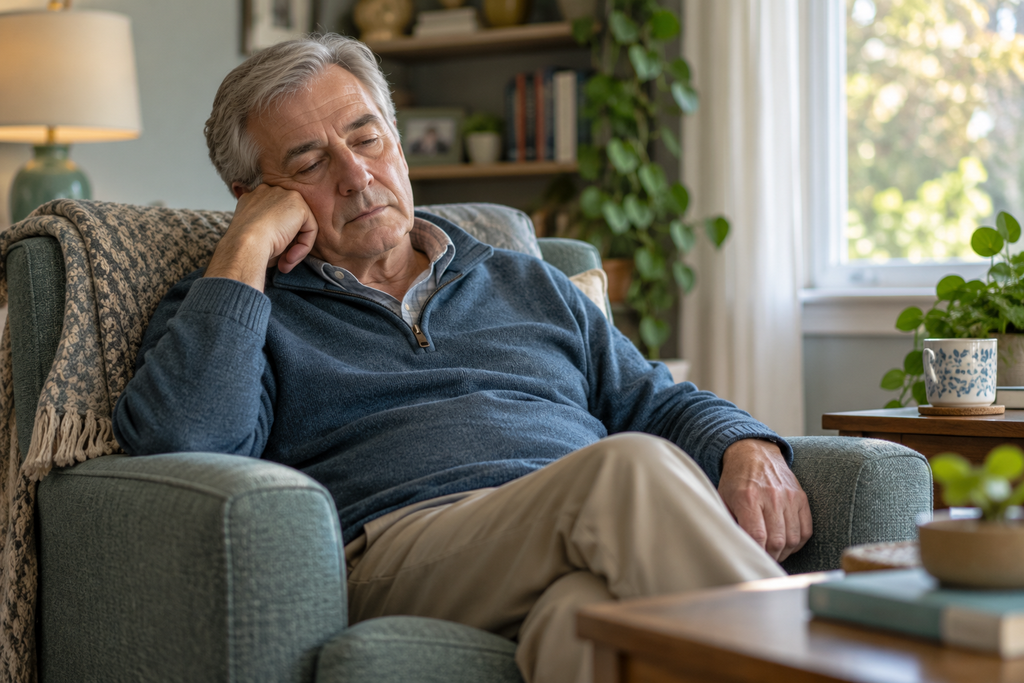
The words “tired” and “exhausted” can describe different experiences. Fatigue, daytime sleepiness, and OFF symptoms can also occur together. The clues below may help you describe what is happening.
| Experience | What you might notice | What to record |
|---|---|---|
| Fatigue | Your body or mind feels drained, but you may not feel able to fall asleep. | What you were doing, when the fatigue began, and whether rest changed it. |
| Daytime sleepiness | Your eyelids feel heavy, you have trouble staying awake, or you could nod off. | Your sleep, any naps, and when the drowsiness occurs. |
| Possible OFF period | Fatigue appears with a return or worsening of symptoms such as stiffness, slowness, tremor, anxiety, or pain. | When symptoms start in relation to your medication doses and what else changes. |
Fatigue is different from sleepiness, although sleep problems can contribute to fatigue. For some people, fatigue also worsens during an OFF period.
If fatigue repeatedly appears as a dose wears off, write down the timing and any other symptoms that occur at the same time. Discuss this information with your prescriber. Never change your dose or medication timing without medical supervision.
Sudden or uncontrollable sleepiness needs attention. Some Parkinson’s medicines can make people sleepy, and unexpected sleep episodes can create safety risks. Do not drive when you feel too sleepy to stay alert, and contact your healthcare team if you are nodding off during everyday activities.
Why does fatigue happen in Parkinson’s disease?

There is no single explanation for Parkinson’s fatigue. Researchers and clinicians consider several possible contributors. More than one may apply to the same person.
1. Parkinson’s-related changes in the brain
Parkinson’s disease affects brain systems involved in movement and other processes. Changes related to the disease may affect how the brain regulates energy, attention, motivation, or effort. Researchers are still working to understand exactly how these changes relate to fatigue.
This may help explain why fatigue does not always match how severe a person’s movement symptoms look. Someone with mild tremor may still feel deeply exhausted, while another person with more visible movement symptoms may report less fatigue.
2. Sleep problems
A night’s sleep may be interrupted by stiffness, tremor, pain, vivid dreams, restless legs, or needing to use the bathroom. Sleep apnea and other sleep disorders can also leave you feeling unrefreshed.
If you often wake feeling tired, tell your healthcare team. A bed partner may notice snoring, pauses in breathing, or movements during sleep that you do not remember. A sleep assessment may be appropriate in some cases.
3. Mood, pain, and stress
Depression and anxiety can affect energy, sleep, concentration, and interest in activities. Ongoing pain can make movement and rest harder. Stress may also make fatigue feel more difficult to manage.
These symptoms deserve attention in their own right. If your mood has changed, you feel persistently worried or low, or pain is interfering with daily life, mention it during your appointment. Addressing another symptom may improve your overall energy, even if it does not remove fatigue completely.
4. Medication side effects
Some medicines can contribute to fatigue or daytime sleepiness. Dopamine agonists such as pramipexole and ropinirole can cause sleepiness in some people. Other medicines, including those prescribed for conditions unrelated to Parkinson’s disease, may also affect alertness or energy.
Note when the fatigue began and whether it changed after starting a medicine or changing a dose. Your prescriber can review your medication list and decide whether an adjustment is appropriate. Do not stop, reduce, or move a dose on your own.
5. Other health conditions
Low blood pressure, anemia, thyroid problems, and other medical conditions can cause or worsen fatigue. Low blood pressure may be especially relevant if you feel weak or light-headed after standing.
A healthcare professional can decide whether your symptoms and health history suggest checking for these or other causes. Avoid starting vitamins or supplements without discussing them with your care team, since some can interact with medicines.
How to track your personal fatigue pattern

For three days, keep a short record of your energy. You do not need to write down every detail. A few notes during the day—or when your energy changes—may be enough to reveal a useful pattern.
Daily Log Checklist
Use this short checklist to notice patterns in your energy over a few days.
- Record your Parkinson’s medication times.
- Note your energy at a few points in the day.
- Mark whether you felt fatigued, sleepy, or both.
- Note any ON or OFF periods and other symptoms.
- Record meals, especially if fatigue often follows one.
- Note physical or mentally demanding activities.
- Briefly describe how you slept.
You could rate your energy from 0 to 10 at three points each day. For example, 0 might mean “no energy to start an activity,” while 10 means “my usual best energy.” Use the same scale each time. The numbers do not need to be exact; they are there to help you notice patterns.
You might discover that fatigue tends to appear after a long appointment, after lunch, or near the end of a medication dose. You may notice that your best energy window is after medication takes effect. You might also find that your energy changes without a clear pattern. That information is still worth sharing.
If you identify a time when you usually feel better, consider saving some of that window for an activity that matters to you. It does not have to be the time when you catch up on chores. You might use it for a walk with a friend, a hobby, an important phone call, or time with family.
Keep the log brief. If tracking starts to feel like another exhausting task, reduce the number of entries. The goal is to learn enough to guide a conversation with your healthcare team, not to monitor every moment.
Practical strategies to manage energy

There is no single strategy that works for everyone with Parkinson’s fatigue. The five practical strategies below can help you pace daily activities, save energy for what matters, choose a suitable reset, and build movement gradually.
Pace yourself before you feel depleted
Some people fall into a boom-and-bust pattern: they do a lot on a better day, then have little energy for the next day or two. It may help to pause before you are exhausted rather than waiting until you have to stop.
Try breaking an activity into smaller steps. For example, prepare the ingredients for a meal, sit down for a few minutes, then continue if you still feel able. When getting dressed, you might lay out your clothes first and take a short pause before starting. A smaller step can feel easier to begin and easier to stop.
Use the half-task approach
If a task feels overwhelming, start with part of it. You might fold half the laundry, clear one section of a table, or walk to the end of the street and back. Pause and check how you feel before deciding whether to continue.
This approach can help you avoid spending all your energy on one activity. It also gives you a chance to notice early signs of fatigue, such as slower movement, trouble concentrating, or a sudden drop in motivation.
Save energy for what matters to you
When your energy is limited, ask yourself: “What is the one thing I most want to do today?” You may decide to postpone a less urgent chore or ask someone to help with it.
This is not about giving up activities. It is a way to make choices that fit the energy you have. If household tasks regularly use up your best energy window, consider whether some can be moved, shared, or broken into shorter sessions.
Match your reset to the problem
If you feel genuinely sleepy, a short nap earlier in the day may help. A nap is less likely to interfere with nighttime sleep if it is brief and not too late, but notice how it affects you. If daytime sleepiness keeps returning, talk with your healthcare team about possible sleep or medication causes.
If you feel drained but not sleepy, lying down may not restore your energy. You could try a gentle stretch, a short walk if safe, or sitting near daylight. Drink according to your usual needs and any fluid limits you have been given. If a heavy lunch seems to precede an energy dip, record the timing and portion size. Follow any medication instructions about meals, and discuss major diet changes with your healthcare team.
Try regular movement at a manageable level
Exercise can be difficult to start when you already feel fatigued. If activity is safe for you, try a small amount and build gradually. A brief walk or a few minutes of gentle movement may be a more realistic starting point than a demanding exercise session.
Recent research reviews suggest that exercise may help reduce Parkinson’s fatigue, but the evidence is not fully settled. One 2026 review focused on trials in which fatigue was a primary outcome. It found five randomized trials overall, including three exercise trials with 142 participants. The exercise group results suggested a reduction in fatigue, but the review rated the evidence as low certainty and reported substantial differences between the studies. [2]
A broader 2026 review included 22 studies and pooled seven exercise trials comparing exercise with non-exercise controls. It reported a benefit and rated the evidence as moderate certainty. The reviews used different inclusion criteria, so their findings should not be treated as a single settled answer. Together, they suggest that suitable activity may help some people, while more consistent research is still needed. [3]
Ask a physiotherapist or healthcare professional how to adapt exercise to your balance, mobility, heart health, and other needs. Stop and seek advice if activity causes concerning symptoms.
Free printable: Parkinson’s fatigue and energy guide
Want to notice patterns in your energy? This free two-page printable includes a three-day tracker to help you record fatigue, sleepiness, medication timing, sleep, meals, and activities. It also offers simple pacing ideas to try and discuss with your healthcare team.
When to consult your healthcare team

Arrange a review if fatigue is persistent, getting worse, or stopping you from managing activities that matter to you. You do not need to wait until you have completed a perfect three-day log. Describe what is happening and when you notice it.
Bring your notes, if you have them. Tell your clinician if fatigue:
- Began or changed after starting a medicine or changing a dose.
- Appears around a particular time after medication.
- Occurs with dizziness when standing.
- Is accompanied by poor sleep, pain, anxiety, or low mood.
- Comes with sudden sleep episodes or difficulty staying awake.
- Is new, severe, or changing quickly.
Your healthcare team may review your medicines, discuss sleep, check blood pressure, or consider tests for other possible causes. The steps will depend on your symptoms and health history.
Do not drive if you feel too sleepy to remain alert. Contact your healthcare team promptly about unexpected sleep episodes. Seek urgent medical help if you faint or lose consciousness.
Frequently Asked Questions
Does Parkinson’s fatigue always improve with rest?
No. Rest may help after activity, but Parkinson’s fatigue does not always improve with sleep or lying down. If you feel sleepy, a nap may help. If you feel drained but alert, pacing or changing activities may be more useful.
Can fatigue be related to medication wearing off?
For some people, fatigue occurs with other symptoms during an OFF period. Record when it begins and whether stiffness, slowness, tremor, anxiety, or pain changes at the same time. Discuss the pattern with your prescriber before making any medication changes.
Should I exercise if I feel fatigued?
That depends on your mobility, health, and how severe the fatigue is. Research suggests exercise may help some people, but it is not a guaranteed or immediate solution. Ask a healthcare professional or physiotherapist what type and amount of activity may suit you.
When is daytime sleepiness a safety concern?
Unexpectedly falling asleep or struggling to stay awake during everyday activities needs medical attention. Avoid driving when drowsy and contact your healthcare team, especially if the sleepiness began after a medication change.
References
- Schifitto G, Friedman JH, Oakes D, Shulman L, Comella CL, Marek K, Fahn S; Parkinson Study Group ELLDOPA Investigators. Fatigue in levodopa-naïve subjects with Parkinson disease. Neurology. 2008;71(7):481–485. doi:10.1212/01.wnl.0000324862.29733.69.
- Alageel S, Hibberd J, Deane KHO. Non-pharmacological interventions for managing fatigue in Parkinson’s disease: A systematic review and meta-analysis. Clinical Parkinsonism & Related Disorders. 2026;14:100434. doi:10.1016/j.prdoa.2026.100434.
- Costa V, Zambetta ML, Gianlorenço AC. Physical exercise for managing fatigue in Parkinson’s disease: Clinical and research recommendations from a systematic review and meta-analysis. Journal of Geriatric Physical Therapy. 2026;49(3):163–171. doi:10.1519/JPT.0000000000000481.
Related Articles
You may also find these Parkinson’s guides helpful:
- A Simple Way to Track Parkinson’s Symptoms in Less Than a Minute
- Parkinson’s Medication Not Working as Well? What to Do
- Daily Routine for Parkinson’s Disease: A Practical Morning-to-Night Guide
- Why Do I Feel Dizzy When I Stand Up? Blood Pressure Changes in Parkinson’s Disease
- Is Cycling Good for Parkinson’s Disease? Updated 2026 Evidence