
Written and reviewed by Dr. Akbar Zaib, PhD in Neurosciences
Neuroscientist • Parkinson’s Researcher
Last updated: August 2026
Does Parkinson’s disease in winter make you feel stiffer, slower or less confident outdoors? Cold temperatures, darker days and slippery conditions can create additional challenges — but a few practical adjustments may help you stay warmer, safer and more active.
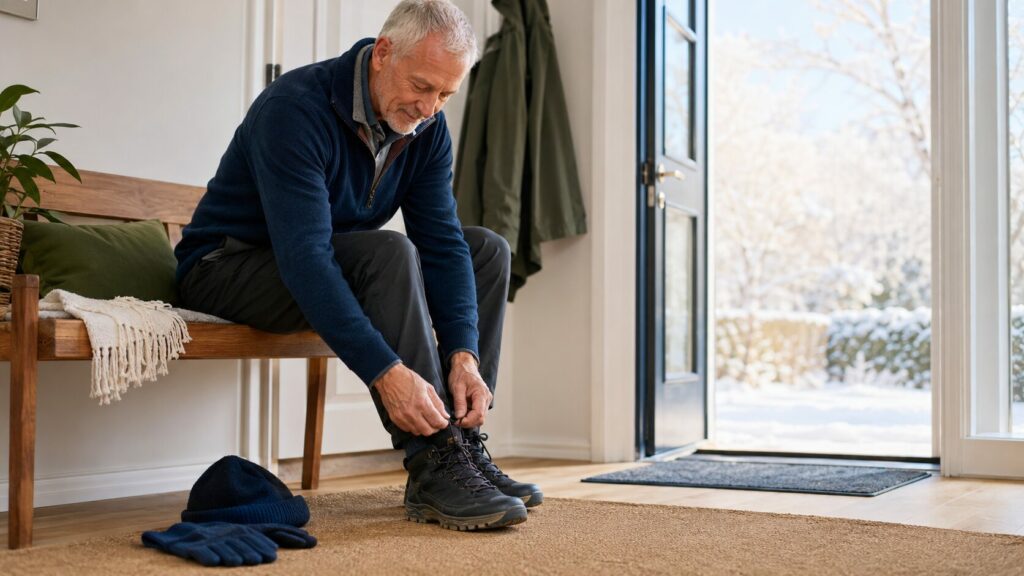
Living with Parkinson’s disease in winter can bring additional challenges. Some people notice more stiffness, tremor, fatigue or difficulty starting to move when temperatures fall. Icy surfaces, bulky clothing and shorter daylight hours may also affect walking confidence, physical activity, mood and sleep.
These changes do not affect everyone in the same way, and worsening symptoms should not automatically be blamed on the weather. However, planning for cold conditions can make everyday activities safer and more manageable.
This guide shares eight practical ways to stay warm, maintain movement and protect your usual routines throughout winter. It also explains when a change in symptoms should be discussed with your healthcare team.
This article provides general educational information and should not replace individual medical advice.
Why winter may feel more difficult with Parkinson’s disease?
Cold weather does not necessarily change Parkinson’s disease itself, but it can make certain symptoms and daily challenges more noticeable.
Possible reasons include:
- Greater muscle stiffness: Cold muscles and joints may feel tighter, making movement less comfortable.
- Increased tremor: Shivering, physical tension or stress caused by cold exposure may temporarily make tremor more noticeable.
- Reduced activity: People often walk and exercise less during winter, which can contribute to stiffness, weakness and poorer balance.
- Slippery or uneven surfaces: Ice, snow and wet floors increase the difficulty of walking and turning.
- Bulky clothing: Heavy coats, gloves and thick footwear may restrict movement or make everyday tasks harder.
- Shorter daylight hours: Reduced light exposure and changes in routine may affect sleep, mood, energy and motivation.
- Temperature-regulation difficulties: Parkinson’s can affect the autonomic nervous system, which helps regulate sweating, circulation and body temperature.
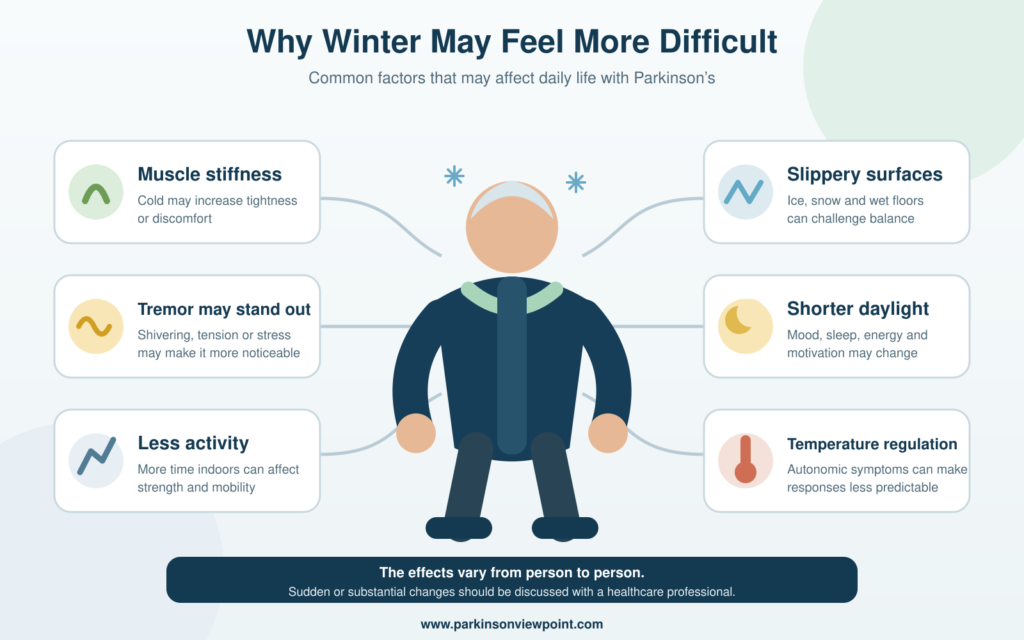
These effects vary considerably. A sudden or substantial worsening of symptoms should not automatically be attributed to winter and may require medical assessment.
1. Dress warmly without restricting movement
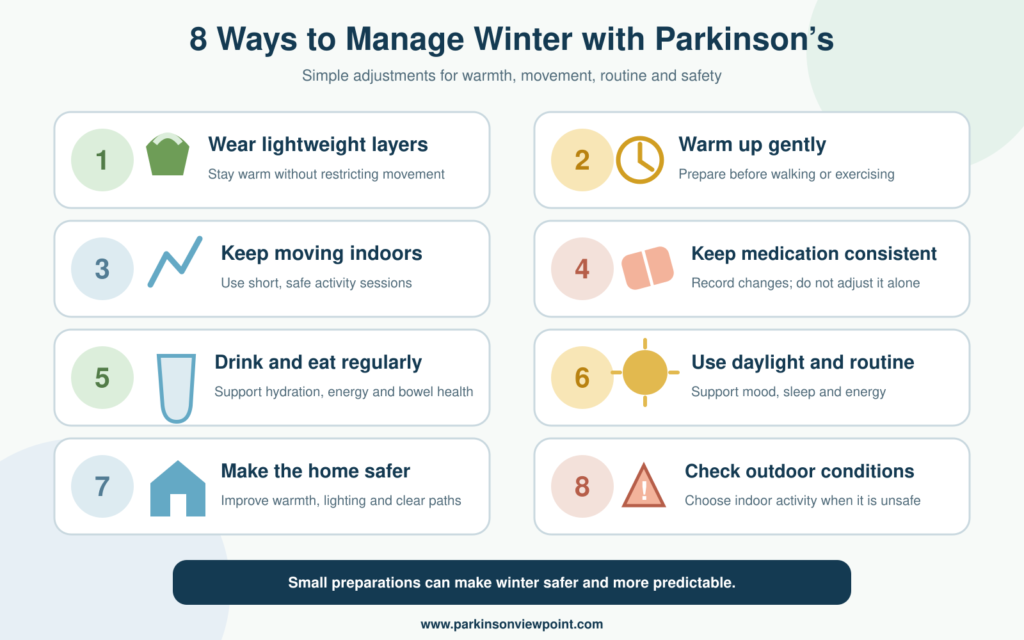
Several lightweight layers are usually easier to move in than one heavy, bulky garment. Layers can also be added or removed as your temperature changes.
A practical winter outfit may include:
- A breathable base layer
- A lightweight insulating middle layer
- A windproof and water-resistant outer layer
- Warm socks, gloves and a hat
- Supportive footwear with good traction
Choose clothing that allows comfortable arm swing, turning and bending. Heavy coats, tight collars or oversized scarves may restrict movement or interfere with balance and visibility.
Buttons, small zips and shoelaces can be difficult when tremor, stiffness or reduced dexterity is present. Magnetic fasteners, larger zip pulls, elasticated waists and slip-on footwear may make dressing easier.
Sit down while putting on trousers, socks and shoes if balance is uncertain. An occupational therapist can also recommend dressing aids or clothing adaptations suited to your needs.
2. Warm up before walking or exercising
Moving directly from a warm room into cold conditions may make the body feel particularly stiff. Before walking outdoors or beginning exercise, spend a few minutes preparing your muscles and attention.
While holding a stable support if needed, try:
- Marching gently in place
- Rolling the shoulders
- Opening and closing the hands
- Straightening each knee
- Shifting weight slowly from side to side
- Taking several deliberate practice steps
A warm shower may also help some people feel more comfortable before activity. Keep the water at a safe temperature, use grab rails where needed and avoid standing suddenly if you experience dizziness or low blood pressure.
A warm-up should feel gentle, not exhausting. Stop if you experience chest pain, unusual breathlessness, marked dizziness or sudden weakness. A physiotherapist can recommend exercises appropriate for your mobility and fall risk.
3. Maintain safe indoor activity
Winter often reduces outdoor walking, but long periods of inactivity can contribute to stiffness, weakness and reduced confidence in movement.
Suitable indoor activities may include:
- Walking along a clear hallway
- Practising repeated sit-to-stand movements from a stable chair
- Gentle stretching or mobility exercises
- Following a Parkinson’s-specific exercise video
- Using a stationary bicycle when appropriate
- Dancing or stepping to rhythmic music
- Completing exercises prescribed by a physiotherapist
Short sessions spread throughout the day may feel more manageable than one long workout. Try scheduling activity for a time when your medication is working well and movement feels easier.
Clear the exercise area of rugs, cables and other obstacles. Keep a stable support nearby if balance is uncertain, and avoid exercising alone if you have a high risk of falling. Choose activities based on your current ability and professional advice.
Get Your Free Parkinson’s Medication Management Diary
Download your free printable diary to easily track your medications, symptoms, and doses.
4. Keep medication routines consistent
Winter can disrupt familiar routines. Later mornings, heavier meals, less activity or cancelled outings may unintentionally change when medication is taken.
Try to:
- Take medication at the prescribed times
- Use alarms or a pill organiser if routines change
- Keep an adequate supply during severe weather
- Arrange prescription refills before storms or holidays
- Record repeated changes in ON and OFF periods
- Note whether symptoms change around meals, activity or time spent outdoors
Some studies have reported seasonal differences in Parkinson’s symptoms or prescribing patterns. However, this does not prove that cold weather directly changes levodopa absorption or that everyone needs a different winter dose.
Do not change medication timing or dosage independently. If doses repeatedly take longer to work, wear off sooner or seem less effective, record the pattern and discuss it with your neurologist, Parkinson’s nurse or pharmacist.
5. Support hydration and regular meals
Parkinson’s patients may feel less thirsty during cold weather and drink less without noticing. Dehydration can contribute to constipation, dizziness, fatigue and low blood pressure.
Helpful habits include:
- Keeping water within easy reach
- Drinking regularly rather than waiting to feel thirsty
- Using warm, non-alcoholic drinks for variety
- Including soups, fruit and other fluid-containing foods
- Monitoring urine colour as a simple guide to hydration
There is no single amount of fluid that suits everyone. People with swallowing difficulties, heart or kidney conditions, or a prescribed fluid restriction should follow individual medical advice.
Regular, balanced meals can also help maintain energy and body weight. Include vegetables, whole grains, healthy fats and suitable sources of protein. Protein should not automatically be restricted; if it appears to affect levodopa response, discuss meal and medication timing with your healthcare team.
Avoid presenting vitamin D, omega-3 products or other supplements as winter treatments for Parkinson’s. Supplements should be considered according to individual nutritional needs, medications and professional advice.
6. Use daylight to support mood and sleep
Shorter winter days can affect sleep, energy, motivation and mood. These changes may feel more pronounced when Parkinson’s already causes fatigue, apathy, anxiety or sleep disturbance.
Helpful strategies include:
- Opening curtains soon after waking
- Spending time near a bright window
- Going outdoors safely during daylight hours
- Keeping a regular waking and sleeping schedule
- Planning enjoyable activities and social contact
- Remaining physically active during the day
- Limiting bright screens close to bedtime
Persistent sadness, loss of interest, withdrawal, increased anxiety or major sleep changes should be discussed with a healthcare professional. These symptoms should not simply be accepted as part of winter or Parkinson’s disease.
Bright-light therapy is sometimes studied for sleep and mood problems in Parkinson’s, but the best timing and dose are not firmly established. Speak with a healthcare professional before using a light-therapy device, particularly if you have an eye condition, bipolar disorder or take medication that increases sensitivity to light.
7. Make the home warmer and safer
A comfortably heated, uncluttered home can make winter movement easier and reduce fall risk.
Check the following areas:
- Keep frequently used rooms at a comfortable temperature.
- Remove loose rugs, cables and clutter from walking routes.
- Keep entrances dry when snow or rain is brought indoors.
- Use motion-activated nightlights in hallways and bathrooms.
- Place commonly used items within easy reach.
- Keep the route between the bedroom and bathroom clear.
- Avoid positioning portable heaters where they block walking paths.
Heating pads, hot-water bottles and electric blankets can cause burns, particularly when sensation, movement or reaction time is reduced. Use the lowest effective setting, follow the manufacturer’s instructions and avoid falling asleep with a heating pad against the skin.
Warm baths may feel relaxing, but getting in and out can increase fall risk. Use grab rails, non-slip surfaces and assistance when needed. Stand up gradually afterward, as heat may worsen dizziness or low blood pressure.
8. Know when outdoor conditions are unsafe
Staying active is valuable, but walking outdoors is not always the safest choice during winter. Ice, packed snow, strong wind, poor visibility and extreme cold can make balance and freezing difficulties more dangerous.
Before going outside:
- Check the temperature and weather warnings.
- Choose cleared, well-lit and treated paths.
- Walk during the warmest and brightest part of the day.
- Wear supportive footwear with good winter traction.
- Allow extra time and avoid rushing.
- Carry a charged phone.
- Walk with another person when conditions are uncertain.
- Make sure walking aids are suitable for snow or ice.
Stay indoors or choose an alternative activity when paths are untreated, visibility is poor, freezing episodes are increasing or you do not feel steady. This is a sensible safety decision—not a loss of independence.
For more detailed fall-prevention and outdoor guidance, see our guide to winter safety for Parkinson’s disease.
When to contact a healthcare professional
Some winter-related changes can be managed through warmth, safer routines and regular activity. Others require medical review.
Contact your healthcare team if you notice:
- A sudden or substantial worsening of stiffness, tremor or slowness
- More frequent or unpredictable OFF periods
- Medication repeatedly taking longer to work
- New or worsening freezing of gait
- Falls or repeated near-falls
- Persistent dizziness or fainting
- Difficulty maintaining body temperature
- New swallowing or breathing difficulties
- Significant changes in mood, sleep or behaviour
- Unintentional weight loss or signs of dehydration
Seek urgent medical help for confusion, extreme drowsiness, slurred speech, very slow breathing, loss of coordination or an unusually low body temperature. These may be signs of hypothermia.
Do not assume that every change is caused by cold weather. Infection, medication effects, dehydration and other medical problems can also cause Parkinson’s symptoms to worsen.
Winter preparation checklist
Before colder weather arrives, check that you have:
- Warm, lightweight clothing that does not restrict movement
- Supportive footwear with suitable winter traction
- A safe walking aid for outdoor conditions, if needed
- An adequate supply of prescribed medication
- Medication reminders that still fit your winter routine
- Clear and dry walking paths inside the home
- Good lighting near entrances, hallways and bathrooms
- A safe indoor exercise plan
- Emergency contact numbers stored and easily accessible
- A charged mobile phone when leaving home
- A plan for shopping, appointments and transport during severe weather
- Someone who can check in or assist when conditions become unsafe
Review this checklist with a caregiver or family member if you need support with mobility, medication, heating or essential errands. Preparing early can reduce last-minute decisions when winter conditions become difficult.
Winter can feel more manageable when the essentials are prepared in advance. Download our free Parkinson’s Winter Preparation Checklist to review home safety, clothing, medication, outdoor conditions and emergency contacts—and keep it somewhere easy to see throughout the colder months.
Key takeaway
Parkinson’s disease in winter may feel more challenging because of cold temperatures, reduced activity, slippery surfaces, bulky clothing and shorter daylight hours. The effects vary, and not every symptom change is caused by the weather.
Lightweight layers, a gentle warm-up, regular indoor activity and a safer home environment can help maintain comfort and mobility. Keep medication routines consistent and record repeated changes rather than adjusting treatment independently.
Choose indoor exercise when outdoor conditions are unsafe, and seek professional advice for significant changes in movement, medication response, mood, swallowing or body temperature. Preparing before winter arrives can make the season feel safer, more predictable and easier to manage.
Disclaimer: The information shared here should not be taken as medical advice. The opinions presented here are not intended to treat any health conditions. For your specific medical problem, consult with your healthcare provider.
Track your Parkinson’s day in less than a minute
The Parkinson’s Daily Diary App lets you record symptoms, medications, daily notes and doctor ready report in under a minute.