
Written and reviewed by Akbar Zaib, PhD in Neurosciences
Last reviewed and updated: October 10, 2026
Drooling in Parkinson’s disease can feel embarrassing and difficult to manage, but understanding why it happens can make a real difference. Here is what may actually help reduce it and when to seek professional support.

Drooling in Parkinson’s disease can feel embarrassing, uncomfortable and difficult to discuss. You may notice saliva collecting in your mouth, leaking from the corners of your lips or wetting your pillow during sleep. For some people, it happens occasionally. For others, it begins to affect speaking, eating, skin comfort and confidence around other people.
Although it may seem that your mouth is producing too much saliva, that is usually not the main problem. Parkinson’s disease can make swallowing slower and less automatic. When saliva is not cleared regularly, it collects in the mouth and may eventually spill out.
The encouraging news is that drooling does not simply have to be accepted as part of Parkinson’s disease. Small daily strategies may help in milder cases, while speech and swallowing therapy, medication and botulinum toxin injections are available when the problem is more persistent.
In this guide, we will explain why drooling happens in Parkinson’s disease, what you can safely try at home, which professional treatments may help, and when it is important to request a swallowing assessment.
Important disclaimer: This article is for educational purposes only and does not replace personalised medical advice. Speak with a qualified healthcare professional before changing medication or beginning a new treatment.
Quick answer: What can help with drooling in Parkinson’s disease?
Helpful options may include:
- Sitting upright and improving head posture
- Making a conscious effort to swallow regularly
- Using reminders or cues to prompt swallowing
- Chewing sugar-free gum, if swallowing is safe
- Working with a speech and language therapist
- Reviewing Parkinson’s symptoms and medications with a clinician
- Using prescribed medicines that reduce saliva
- Receiving botulinum toxin injections into the salivary glands
The right approach depends on how often the drooling occurs, whether swallowing is also affected and whether the person can safely manage gum, sweets or oral medication. Persistent drooling should therefore be discussed with a Parkinson’s specialist, nurse or speech and language therapist.
Why does drooling happen in Parkinson’s disease?
Drooling in Parkinson’s disease is usually not caused by the body producing too much saliva. In fact, some people with the disease may produce less saliva than usual. The main difficulty is that saliva is not being cleared from the mouth efficiently.
Normally, we swallow saliva automatically throughout the day without thinking about it. Parkinson’s disease can slow this automatic swallowing process. The muscles involved in moving the lips, tongue, jaw and throat may also become slower or stiffer, making it harder to move saliva towards the back of the mouth and swallow it.
Several other Parkinson’s-related changes may contribute:
- Reduced swallowing frequency: You may swallow less often, allowing saliva to collect.
- Slower mouth and throat movements: Bradykinesia can affect the muscles used for swallowing.
- An open-mouth posture: Reduced facial movement or difficulty keeping the lips closed may allow saliva to escape.
- A forward-bent posture: A lowered head or stooped position can make saliva more likely to move towards the front of the mouth.
- Reduced awareness: Some people do not immediately notice that saliva is collecting or leaking.
- Difficulty dividing attention: Drooling may become worse while concentrating on walking, talking or another activity because swallowing receives less attention.
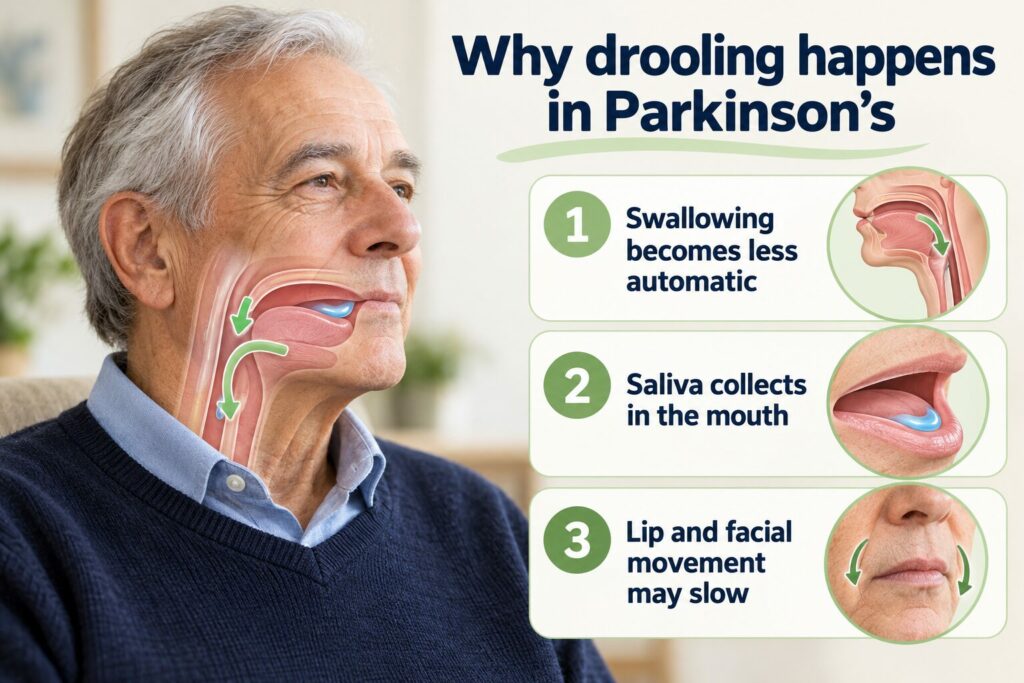
Drooling can happen during the day, at night or both. Some people first notice a wet pillow in the morning, while others experience saliva escaping when speaking, walking or concentrating on a task.
Understanding the cause is important because the goal is not always simply to “dry up” the mouth. Saliva protects the teeth and gums, keeps the mouth comfortable and helps with chewing and swallowing. Reducing it too much can create new problems, including dry mouth, thick saliva and difficulty swallowing.
What research shows
A study published in Movement Disorders compared people with Parkinson’s disease who experienced daytime drooling with those who did not. The researchers found that drooling was not caused by one factor alone. Reduced facial movement, unintended mouth opening, swallowing difficulties and greater Parkinson’s severity all contributed. These findings support the idea that drooling is mainly related to difficulty controlling and clearing saliva rather than producing too much of it.
Key takeaway: Drooling in Parkinson’s disease usually happens because swallowing becomes slower or less automatic—not because the mouth is producing excessive saliva. The safest approach is to improve saliva control while avoiding an overly dry mouth.
Why drooling should not be ignored
Drooling may appear to be a minor inconvenience, but it can affect much more than physical comfort. Some people begin avoiding conversations, social gatherings or eating in public because they are worried that others will notice. Constantly wiping the mouth can also feel frustrating and may reduce confidence.
Possible effects include:
- Wet clothing, bedding or pillows
- Sore, cracked or irritated skin around the mouth and chin
- Difficulty speaking clearly when saliva collects in the mouth
- Interrupted sleep because of nighttime drooling
- Embarrassment or anxiety in social situations
- Reduced willingness to leave home or meet other people
- Additional work and concern for caregivers
Drooling may also occur alongside swallowing difficulties. Saliva that collects towards the back of the mouth can sometimes enter the airway instead of being swallowed safely. This is called aspiration. It may cause coughing or choking, although aspiration can occasionally happen without an obvious cough.
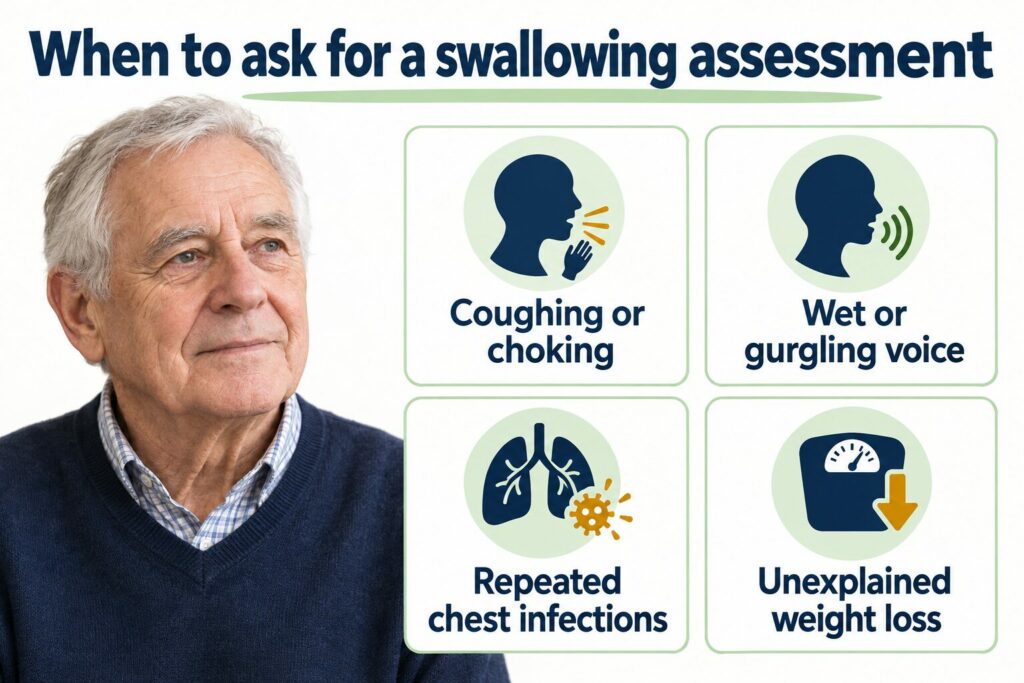
Seek professional advice if drooling is accompanied by:
- Coughing or choking when eating or drinking
- A wet or gurgling voice after swallowing
- Repeated chest infections
- Unexplained weight loss or dehydration
- Meals taking much longer than usual
- Food, drinks or tablets feeling stuck
- Shortness of breath or fever after a possible choking episode
These signs do not necessarily mean that a serious problem is present, but they should be assessed. A speech and language therapist can evaluate swallowing and determine whether further testing or specific strategies are needed.
Key takeaway: Drooling can affect comfort, communication and confidence, but it may also be a sign that swallowing has changed. Coughing, choking, a wet-sounding voice or repeated chest infections should be discussed with a healthcare professional.
Simple strategies that may help reduce drooling
If drooling is mild, a few practical changes may make it easier to manage. These strategies do not work equally well for everyone, but they can be useful starting points.

Use regular swallowing reminders
Because swallowing may no longer happen automatically, try turning it into a conscious action. Set a quiet reminder on your phone or place a small note somewhere visible with a simple instruction such as:
Lips together. Sit tall. Swallow.
A caregiver can also offer a gentle verbal cue, especially during activities when drooling tends to become worse.
Improve your posture
Sit or stand as upright as comfortably possible, with your head raised rather than leaning forward. A forward-bent posture can encourage saliva to move towards the front of the mouth.
If maintaining an upright position is difficult, a physiotherapist or occupational therapist may be able to recommend supportive seating or posture adjustments.
Practise closing your lips
Parkinson’s disease can reduce awareness of an open mouth. Periodically checking that your lips are gently closed may help keep saliva inside the mouth until you are ready to swallow.
Avoid clenching your jaw or pressing your lips together forcefully. The goal is a comfortable, relaxed closure.
Take a deliberate swallow before speaking
If saliva collects while you are talking, pause briefly, swallow and then continue. Taking a deliberate swallow before answering the phone, beginning a conversation or leaving home may also help.
Consider sugar-free gum or sweets carefully
Chewing sugar-free gum or sucking a sugar-free sweet may stimulate jaw movement and prompt more frequent swallowing. This can temporarily improve saliva clearance for some people.
However, these options are not appropriate for everyone. Do not use gum or hard sweets if you have swallowing difficulties, choking episodes, significant cognitive problems or trouble controlling items inside your mouth. Ask a speech and language therapist if you are unsure.
Protect the skin around your mouth
Gently pat the skin dry instead of repeatedly rubbing it. If the skin becomes sore, a simple fragrance-free barrier cream may help protect it from constant moisture. Ask a pharmacist or healthcare professional which product is suitable.
Keep a simple record
Notice when drooling is most troublesome. For example:
- During conversations
- While walking or concentrating
- Around medication “OFF” periods
- When tired
- During meals
- While sleeping
Recording these patterns for several days can help your Parkinson’s clinician understand the problem and choose the most appropriate support.
Key takeaway: Start with conscious swallowing, upright posture and gentle lip closure. Track when drooling happens, and only use gum or hard sweets when swallowing is known to be safe.
How speech and swallowing therapy can help
A speech and language therapist does more than help with speech. These professionals are also trained to assess the muscles and movements involved in chewing, controlling saliva and swallowing safely.

During an assessment, the therapist may examine:
- How well you close your lips
- The movement of your tongue and jaw
- How frequently and effectively you swallow
- Whether saliva collects inside your mouth
- Your posture and head position
- Whether you cough or show other signs of swallowing difficulty
- How drooling affects speaking, eating and daily activities
The therapist may then recommend exercises or strategies based on the specific cause of the problem. These might include practising deliberate swallows, improving lip closure, using swallowing reminders or adjusting posture.
If there are concerns about food, drinks or saliva entering the airway, a more detailed swallowing examination may be recommended. This could include a videofluoroscopic swallowing study, sometimes called a modified barium swallow, or a fibreoptic endoscopic evaluation of swallowing. These tests allow the clinical team to observe what happens during swallowing and identify any risk of aspiration.
It is important not to begin random mouth or swallowing exercises found online. An exercise that is appropriate for one person may not address another person’s difficulty. Some techniques may also be unsuitable when swallowing safety has not been assessed.
A therapist can also help caregivers provide respectful reminders without making the person feel constantly watched or corrected. A discreet cue — such as touching the chin or saying an agreed word — may work better than repeatedly saying, “Wipe your mouth.”
What research shows
A study published in the International Journal of Language & Communication Disorders examined a specialised speech and language therapy approach for drooling in Parkinson’s disease. The programme included strategies to improve saliva control and a portable metronome that reminded participants to swallow regularly. The preliminary findings supported the use of deliberate swallowing cues, although the researchers noted that further studies were needed.
Key takeaway: A speech and language therapist can identify why saliva is not being managed effectively and recommend personalised strategies. If choking, coughing or repeated chest infections occur, request a formal swallowing assessment rather than relying only on home remedies.
Medicines that reduce saliva
When practical strategies and therapy are not enough, a clinician may consider medication to reduce saliva production. These medicines are generally used carefully because saliva is still needed to protect the mouth, support dental health and help with chewing and swallowing.
One option is glycopyrrolate, also called glycopyrronium. It belongs to a group of medicines known as anticholinergics. It reduces signals to the salivary glands, so less saliva is produced.
Depending on the country and the person’s circumstances, clinicians may also consider other anticholinergic treatments, including certain tablets, patches or drops. Some of these uses may be “off-label,” meaning the medicine is being used for a purpose or in a way that is not specifically included in its original licence.
These medicines can cause side effects such as:
- Dry mouth or thick, sticky saliva
- Constipation
- Blurred vision
- Difficulty passing urine
- Increased heart rate
- Drowsiness
- Confusion, memory problems or hallucinations

Older adults and people already experiencing cognitive changes, constipation, urinary problems or hallucinations may be particularly sensitive to these effects. Anticholinergic medicines can also interact with other treatments, so the person’s full medication list should be reviewed first.
Medication should not be started, stopped or adjusted without professional advice. The goal is not to eliminate saliva completely, but to reduce troublesome drooling while keeping the mouth comfortable and swallowing manageable.
Key takeaway: Prescription medicines may reduce drooling, but they can also cause dry mouth, constipation, urinary problems and cognitive side effects. Treatment should be selected and monitored by a clinician who understands the person’s Parkinson’s symptoms and other health conditions.
Can botulinum toxin injections help?
Botulinum toxin injections are an established treatment for persistent drooling in Parkinson’s disease. Although botulinum toxin is widely known for cosmetic use, it is also used medically to manage several neurological symptoms.
For drooling, a trained healthcare professional injects a small amount of botulinum toxin directly into selected salivary glands, usually the parotid glands near the cheeks and the submandibular glands beneath the jaw. Ultrasound may be used to help place the injections accurately.
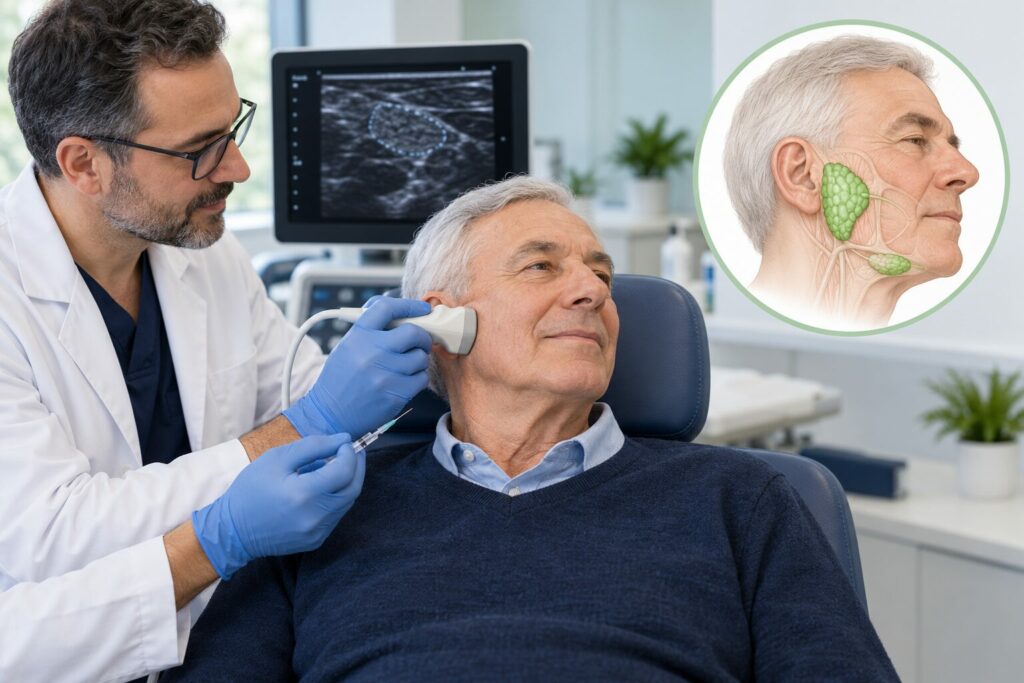
The treatment temporarily blocks some of the nerve signals that tell these glands to produce saliva. This can reduce saliva pooling and leakage without affecting the whole body as much as an oral medicine might.
The improvement is not immediate. It may take several days to become noticeable, and the benefit usually lasts for a few months. If the treatment works well, injections may be repeated at intervals recommended by the clinical team.
Possible side effects include:
- Dry mouth
- Thick or sticky saliva
- Discomfort or bruising at the injection site
- Temporary weakness in nearby muscles
- Changes in chewing
- Worsening swallowing difficulty
Because swallowing problems can already occur in Parkinson’s disease, the clinician should assess this risk before treatment. Tell the clinical team about any coughing, choking, unexplained weight loss or previous aspiration problems.
Botulinum toxin does not correct the underlying swallowing changes. It reduces the amount of saliva that needs to be managed. For this reason, it may work best as part of a wider plan that includes swallowing assessment, posture support and practical daily strategies.
What research shows
A study published in the Cochrane Database of Systematic Reviews examined the planned evaluation of botulinum toxin for drooling in adults with Parkinson’s disease. The authors explained that injections into the salivary glands may reduce saliva production, but important questions remained about the most effective dose, injection sites and possible side effects. This publication was a review protocol rather than a completed clinical study, so it did not provide final conclusions about effectiveness.
A separate randomized controlled trial and meta-analysis published in Parkinsonism & Related Disorders found mixed results. The small clinical trial did not show a significant benefit from the particular dose tested, but the combined analysis of six earlier studies found meaningful improvements in functional drooling outcomes. The researchers suggested that the dose and choice of salivary glands may affect how well the treatment works.
Key takeaway: Botulinum toxin injections can provide several months of relief when drooling remains troublesome. They should be given by an experienced professional, with swallowing safety considered before and after treatment.
Could Parkinson’s medication timing make a difference?
Drooling may become more noticeable when Parkinson’s medication is wearing off. During an “OFF” period, stiffness and slowness can increase, including in the muscles of the face, mouth and throat. Posture may also become more stooped, and swallowing may require greater effort.
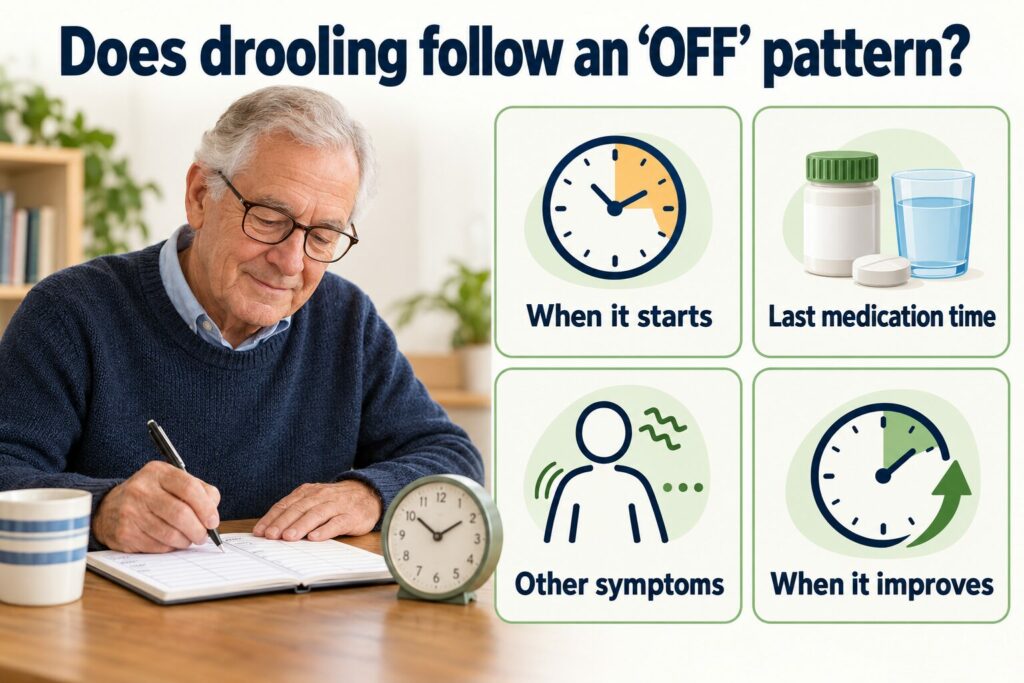
If drooling follows a predictable pattern, record:
- When it begins
- What you were doing at the time
- When you last took Parkinson’s medication
- Whether other symptoms also became worse
- How long the drooling lasted
- Whether it improved after the next medication dose
This information can help the Parkinson’s specialist determine whether drooling is connected to medication timing or broader motor fluctuations. In some cases, improving the management of “OFF” periods may also improve saliva control.
However, increasing or changing Parkinson’s medication does not reliably solve drooling for everyone. Saliva management and swallowing difficulties can have several causes, and some medicines may even contribute to dry mouth, confusion or swallowing changes.
Bring a complete list of prescription medicines, over-the-counter products and supplements to the appointment. The clinician can check whether any treatment may be worsening saliva control or whether several medicines are producing overlapping side effects.
Do not take Parkinson’s medication earlier, later or at a different dose solely to control drooling unless your clinician advises you to do so.
Key takeaway: Track whether drooling becomes worse as Parkinson’s medication wears off. A clear record can help your specialist identify a possible pattern, but medication timing should only be changed with professional guidance.
What can help with drooling at night?
Nighttime drooling may be one of the earliest saliva-control changes noticed in Parkinson’s. A wet pillow in the morning does not automatically mean that swallowing is unsafe, but frequent or heavy drooling is worth mentioning to the healthcare team.
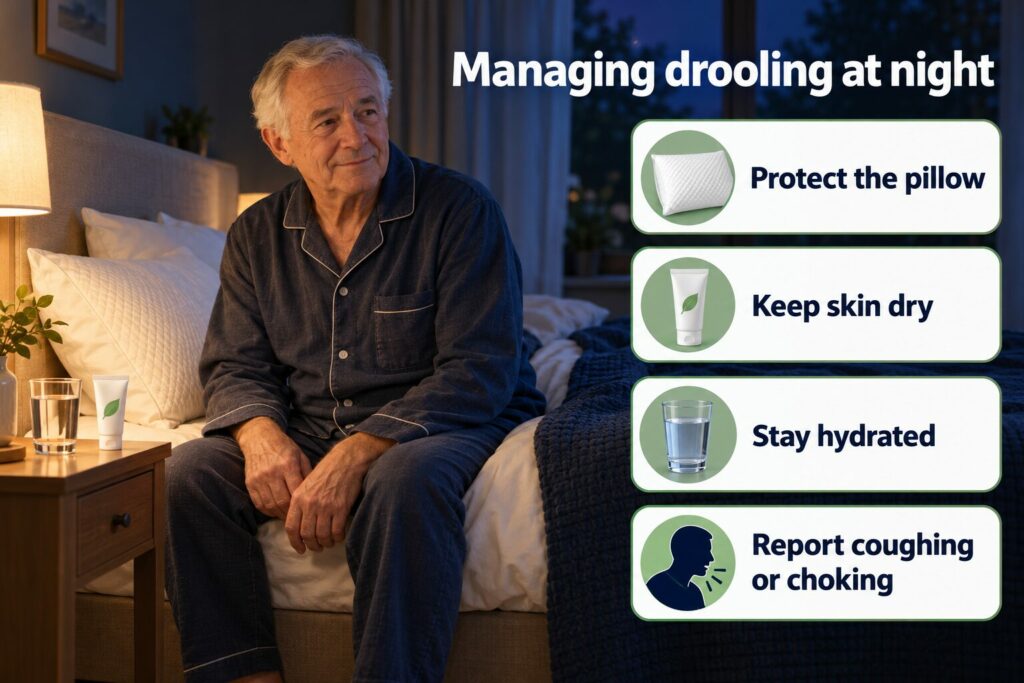
Sleeping on the side can make saliva more likely to escape from the mouth. However, changing to sleeping on the back is not suitable for everyone, particularly people with sleep apnoea, breathing problems, reflux or difficulty moving safely in bed. Comfort and safety should come first.
The following steps may help:
- Raise the head and upper body slightly if this is comfortable and medically appropriate.
- Check whether nasal congestion is causing mouth breathing.
- Use a breathable, washable pillow protector.
- Keep the skin around the mouth clean and gently dry it in the morning.
- Apply a suitable barrier cream if the skin becomes sore.
- Maintain good oral hygiene because saliva remaining around the mouth can irritate the skin.
- Note whether nighttime drooling becomes worse after medication changes or alongside other symptoms.
Avoid trying to limit fluids simply to reduce drooling. Dehydration can worsen constipation, dizziness, confusion and thick saliva, all of which may create additional problems in Parkinson’s.
Nighttime drooling should receive closer attention if it occurs with coughing during sleep, waking with a wet or gurgling voice, breathing difficulties, repeated chest infections or increasing problems swallowing food and drinks.
Key takeaway: Protect the pillow and skin, address possible mouth breathing and keep hydration adequate. Do not force a particular sleeping position, and seek advice if nighttime drooling occurs with coughing, breathing changes or other swallowing concerns.
How caregivers can help without causing embarrassment
Drooling can be a sensitive symptom. A person may already feel self-conscious about it, so repeated public reminders or wiping their mouth without asking can feel uncomfortable or reduce their sense of independence.
Caregivers can help by agreeing on a discreet cue in advance. This might be a particular word, a gentle touch to the chin or a small hand signal that reminds the person to close their lips and swallow. The cue should be easy to recognise without drawing attention.

Other supportive approaches include:
- Keeping tissues or a soft cloth within easy reach
- Offering a private reminder before visitors arrive or before leaving home
- Encouraging an upright sitting position without repeatedly correcting posture
- Noticing whether drooling worsens during tiredness or medication “OFF” periods
- Recording coughing, choking or changes in the person’s voice
- Helping arrange a speech and swallowing assessment when needed
- Allowing enough time for the person to swallow before speaking again
When helping with mouth care, gently pat the skin dry rather than rubbing it. If clothing frequently becomes wet, an absorbent scarf or neckwear may be more discreet and dignified than a visible bib, depending on the person’s preference.
Most importantly, ask the person how they would like to be supported. Some people appreciate reminders, while others prefer to manage the symptom independently unless they request help.
Key takeaway: Use discreet, agreed reminders and protect the person’s dignity. The most helpful caregiver support is practical, respectful and based on the individual’s preferences.
What to discuss with your healthcare team
You do not need to wait until drooling becomes severe before asking for help. Mention it to your neurologist, Parkinson’s nurse or primary-care clinician if it is affecting your comfort, sleep, speaking, eating or willingness to spend time with others.

Before the appointment, keep a short record for several days. Include:
- Whether drooling happens during the day, at night or both
- How often it occurs and how troublesome it feels
- Activities that make it worse
- Any connection with medication “OFF” periods
- Whether saliva feels watery, thick or sticky
- Any coughing or choking
- Changes in speech or voice after swallowing
- Recent chest infections
- Any weight loss or longer mealtimes
- Strategies you have already tried
Useful questions to ask include:
- Could this drooling be related to a swallowing problem?
- Should I be referred to a speech and language therapist?
- Do I need a formal swallowing assessment?
- Could my medication timing be contributing?
- Would a saliva-reducing medicine be suitable for me?
- What side effects should I watch for?
- Could botulinum toxin injections help?
- How can we reduce drooling without making my mouth too dry?
Take an up-to-date medication list with you, including non-prescription products and supplements. If possible, bring your symptom record or ask a caregiver who has observed the problem to attend.
Seek urgent medical help if the person has serious difficulty breathing, appears unable to clear their airway, or develops signs of a severe chest infection after choking.
Key takeaway: Prepare a short record of when drooling happens and any related swallowing symptoms. This gives the healthcare team clearer information and helps them choose between therapy, medication, botulinum toxin or further assessment.
Frequently asked questions about drooling in Parkinson’s disease
Does Parkinson’s disease cause too much saliva?
Usually, no. The main problem is that Parkinson’s disease can reduce the frequency and efficiency of automatic swallowing. Saliva then collects in the mouth and may leak from the lips.
Is drooling a sign that Parkinson’s disease is getting worse?
Drooling can become more common as Parkinson’s disease progresses, but its appearance does not by itself show exactly how quickly the condition is changing. New or worsening drooling should still be discussed with the healthcare team, particularly if swallowing has also changed.
Can chewing gum stop drooling?
Sugar-free gum may encourage chewing and more frequent swallowing, providing temporary relief for some people. However, it can present a choking risk and should not be used by anyone who has difficulty safely controlling or swallowing food and objects in the mouth.
Can levodopa improve drooling?
Levodopa may help some people when drooling becomes worse during medication “OFF” periods. However, it does not consistently control drooling, and Parkinson’s medication should not be adjusted without guidance from the prescribing clinician.
Are botulinum toxin injections safe?
Botulinum toxin injections are an established medical treatment for persistent drooling and can be effective for several months. Possible side effects include dry mouth, thick saliva and worsening swallowing difficulty. The treatment should therefore be administered by an experienced healthcare professional.
Can drooling be completely stopped?
Treatment can substantially reduce drooling for many people, but the results vary. Completely drying the mouth is not the goal because saliva supports oral health, chewing and swallowing. The aim is to make drooling manageable without causing troublesome dryness.
Which healthcare professional should I contact?
A Parkinson’s specialist or nurse can review medication and treatment options. A speech and language therapist can assess saliva control and swallowing safety. A dentist may also help if dry mouth, skin irritation or oral-health problems have developed.
Key takeaway: Drooling can often be reduced, even if it cannot always be stopped completely. The best results usually come from matching treatment to the underlying problem while protecting swallowing and oral health.
Final thoughts
Drooling in Parkinson’s disease is common, but that does not mean it should simply be accepted. It can affect comfort, communication, sleep, confidence and social life. In some cases, it may also occur alongside swallowing changes that need professional assessment.

Begin by noticing when the problem happens. Conscious swallowing, improved posture, gentle lip closure and discreet reminders may be enough to help with mild drooling. A speech and language therapist can provide more personalised strategies and check whether swallowing remains safe.
When these approaches are not sufficient, prescription medicines or botulinum toxin injections may reduce saliva production. Each option has possible side effects, so treatment should balance better saliva control with the need to protect the mouth and support safe swallowing.
Most importantly, do not feel embarrassed about raising the problem. Drooling is a recognised Parkinson’s symptom, and several management options are available. Bringing a short symptom record to your appointment can help the healthcare team understand the pattern and identify the most appropriate next step.
Related articles
Drooling can sometimes occur alongside other changes affecting the mouth, throat and communication. You may also find these guides helpful:
- 7 Signs of Swallowing Problems in Parkinson’s Disease—and What to Do
- Voice Changes in Parkinson’s Disease: Why Is My Voice Getting Softer?
References
- Kalf JG, Munneke M, van den Engel-Hoek L, et al. Pathophysiology of diurnal drooling in Parkinson’s disease. Movement Disorders. 2011;26(9):1670–1676. View the study
- Marks L, Turner K, O’Sullivan J, Deighton B, Lees A. Drooling in Parkinson’s disease: a novel speech and language therapy intervention. International Journal of Language & Communication Disorders. 2001;36(Suppl):282–287. View the study
- Hill F, Miller N, Walsh RA, et al. Botulinum toxin for drooling in Parkinson’s disease. Cochrane Database of Systematic Reviews. 2016;(10):CD012408. View the paper
- Narayanaswami P, Geisbush T, Tarulli A, et al. Drooling in Parkinson’s disease: a randomized controlled trial of incobotulinum toxin A and meta-analysis of botulinum toxins. Parkinsonism & Related Disorders. 2016;30:73–77. View the study
Track your Parkinson’s day in less than a minute
The Parkinson’s Daily Diary App lets you record symptoms, medication information and daily notes, and create a doctor-ready report in under a minute.