
Written and reviewed by Akbar Zaib, PhD in Neurosciences
Remembering medication times can be challenging when living with Parkinson’s disease. But could a simple reminder make daily medication management easier? From phone alarms and pill organizers to automatic dispensers, discover the best Parkinson’s medication reminders to help you stay organized, avoid missed doses, and feel more confident about your daily routine.

“I know it’s time for my next pill… but did I already take it?”
For many people living with Parkinson’s disease, this is a familiar and frustrating question.
Parkinson’s medications, particularly levodopa, may need to be taken several times throughout the day. Remembering each dose can become difficult when you’re dealing with tremor, stiffness, fatigue, or changes in memory and concentration.
Missing a dose or taking it later than prescribed may affect symptom control. Accidentally taking an extra dose can also cause problems.
Fortunately, Parkinson’s medication reminders can make daily medication routines easier to manage. From simple phone alarms and pill organizers to automatic medication dispensers, there are several ways to stay organized.
In this guide, we’ll explore five practical reminder methods, how to choose the right one, and three medication-management tools worth considering.
The goal isn’t to find the most expensive device. It’s to find a system that helps you take your medication safely, consistently, and with less daily worry.
Why medication reminders matter in Parkinson’s disease
For many Parkinson’s patients, taking medication at the prescribed time is important for keeping symptoms under control.
Levodopa, one of the most commonly prescribed Parkinson’s medications, helps replenish dopamine in the brain. However, its benefits may wear off between doses, sometimes causing stiffness, slowness, tremor, or difficulty walking to return.
Taking medication later than prescribed may contribute to these OFF periods, when symptoms become more noticeable.
Medication reminders can help by:
- Reducing forgotten doses: Providing a clear signal when medication is due.
- Supporting consistent timing: Helping maintain the schedule recommended by your neurologist.
- Reducing uncertainty: Making it easier to follow a routine, especially when combined with a record of doses taken.
- Helping caregivers: Making medication schedules easier to coordinate.
However, a reminder alone cannot confirm that medication was actually taken. This is why combining reminders with a simple medication log can be particularly useful.
Key takeaway: Medication reminders help you follow your prescribed schedule more consistently, but recording completed doses is equally important for avoiding confusion.
5 Practical ways to remember Parkinson’s medication
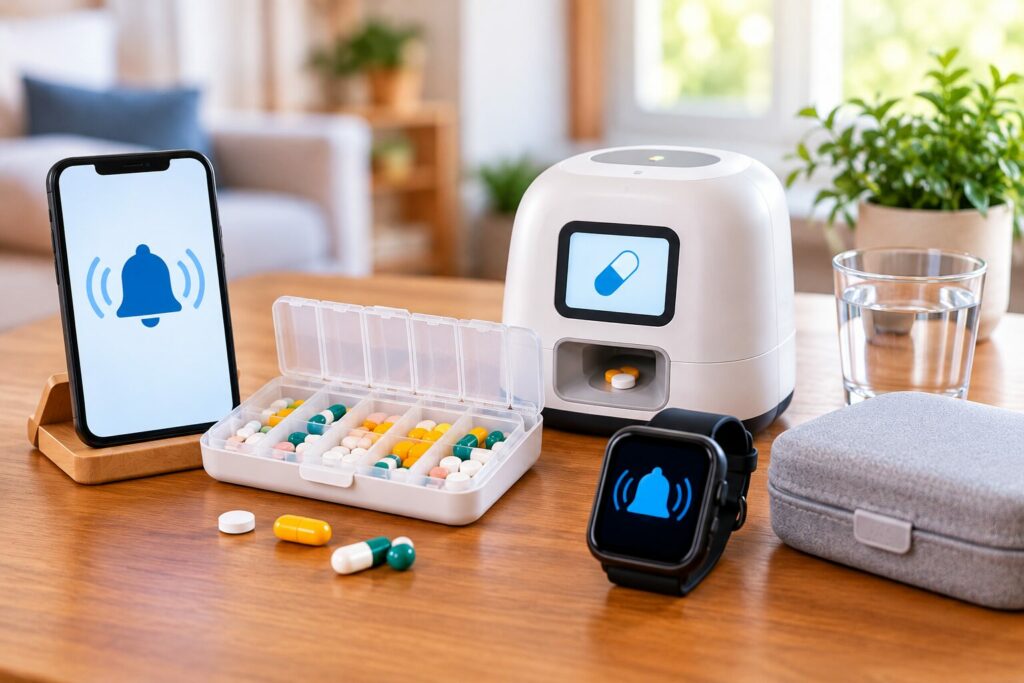
You don’t necessarily need an expensive device to manage your medication schedule. Sometimes, a simple reminder system works just as well. Here are five practical options to consider.
1. Set phone alarms for each dose
Most smartphones allow you to set multiple daily alarms. You can label each alarm with the medication name and scheduled time.
For example, if you take levodopa four times daily, you can set four separate reminders.
Practical tip: Choose a clear alarm sound and label it “Parkinson’s medication.” After taking your dose, mark it as completed in a medication log rather than simply dismissing the alarm.
2. Keep a written medication schedule
A printed medication schedule can be particularly helpful if you prefer not to use technology.
Write down each medication, its prescribed dose, and the time it should be taken. Keep the schedule somewhere visible, such as near your usual medication area.
Practical tip: Add a small checkbox beside each dose and tick it immediately after taking the medication.
3. Use a daily or weekly pill organizer
Pill organizers have separate compartments for different days or times. They can help you see which medications are scheduled and whether a compartment has been emptied.
However, some people with Parkinson’s disease may find small compartments difficult to open because of tremor or reduced hand dexterity.
Practical tip: Choose an organizer with large, easy-to-open compartments, and ask your pharmacist whether your medications can safely be stored outside their original packaging.
4. Try an electronic medication reminder
Electronic reminders include pillboxes with built-in alarms, vibrating alerts, or flashing lights. Some devices allow several reminders throughout the day.
These may be useful for people who frequently miss phone notifications or prefer a dedicated medication device.
Practical tip: Look for large buttons, clear displays, and alarms that are easy to hear or see.
5. Consider an automatic pill dispenser
Automatic dispensers can release a prepared dose at a scheduled time. Some models also provide caregiver notifications or other connected features.
They may be helpful for people managing complex medication schedules or needing additional support.
However, automatic dispensers are generally more expensive and may require setup, regular refilling, or a subscription.
Practical tip: Before purchasing, check whether the device can accommodate your prescribed schedule and whether you can retrieve the dispensed medication comfortably.
Key takeaway: Start with the simplest reminder system that meets your needs. A phone alarm and written medication log may be enough, while more complex schedules may benefit from electronic reminders or automatic dispensers.
How to choose the right Parkinson’s medication reminder
The best medication reminder depends on your daily routine, Parkinson’s symptoms, and how much support you need. Before choosing a device, consider these six factors.
- Number of daily doses: If you take medication several times a day, choose a reminder that supports multiple alarms or scheduled doses.
- Hand dexterity: Tremor, stiffness, or slow movements may make small buttons and pill compartments difficult to use. Look for larger, easy-to-open designs.
- Vision and hearing: Choose devices with large displays, clear labels, and alarms you can easily see or hear.
- Memory and concentration: If you sometimes forget whether you’ve taken a dose, consider a system that records completed doses rather than relying on alarms alone.
- Caregiver support: Some electronic dispensers offer notifications that help family members monitor medication routines.
- Cost and simplicity: A basic pill organizer or phone alarm may be sufficient. More advanced devices can offer additional features but may involve higher costs.
Key takeaway: Choose a reminder that matches your abilities and medication schedule. A simple, reliable system you can use every day is often better than a complicated device with features you don’t need.
Helpful tools for managing Parkinson’s medication
The right medication reminder can make daily routines easier, especially when several doses are needed throughout the day.
Not everyone needs an expensive automatic dispenser. Some people benefit from a simple pill organizer, while others need multiple alarms or caregiver support.
Here are three options worth considering.
1. Hero Health — for complex medication schedules

Best for: People taking several medications daily or needing caregiver support.
Hero is a smart medication dispenser that stores and dispenses scheduled doses, provides reminders, and offers connected medication-management features.
Why consider it?
- Automatically dispenses scheduled doses.
- Provides medication reminders.
- Offers caregiver notifications and monitoring features.
Things to consider: Hero is a premium option with ongoing subscription costs. It may be unnecessary if you only need basic reminders.
2. TabTime — for multiple daily reminders

Best for: People who need several daily reminders without a complicated smart system.
TabTime offers electronic pillboxes, multi-alarm reminders, and automatic dispensers. Some products are marketed specifically for people with Parkinson’s disease.
Why consider it?
- Multiple programmable daily alarms on selected models.
- Simple options without smartphone connectivity.
- Portable reminders and larger dispensers.
Things to consider: Features vary by model. Check alarm capacity, ease of opening, and availability in your country.
Explore TabTime Medication Reminders →
3. Dosey — for simple medication organization

Best for: People who generally remember their doses but want an organized way to store and carry medication.
Dosey offers portable pill organizers designed for everyday medication routines.
Why consider it?
- Simple daily medication organization.
- Portable designs.
- No electronic setup or subscription.
Things to consider: Standard organizers do not provide alarms or automatically dispense medication.
Explore Dosey Pill Organizers →
Which option might be right for you?
| Your Main Need | Option to Consider |
|---|---|
| Automatic dispensing and caregiver support | Hero Health |
| Multiple reminders with simpler controls | TabTime |
| Organizing pills without electronics | Dosey |
A helpful reminder: These tools support medication routines but do not replace guidance from your neurologist or pharmacist. Check whether you can comfortably operate a device before purchasing.
Affiliate disclosure: Some links in this section are affiliate links. If you purchase through these links, Parkinson’s Viewpoint may earn a small commission at no additional cost to you. Recommendations are based on practical usefulness, not commission rates.
Common medication reminder mistakes to avoid
Even with a good reminder system, medication mistakes can happen. Here are four common problems to watch for.
1. Dismissing an alarm without taking medication
Turning off an alarm doesn’t necessarily mean you’ve taken your dose. You might get distracted and forget.
What helps: Mark each dose as completed immediately after taking it, using a checklist or medication log.
2. Accidentally taking the same dose twice
If you cannot remember whether you’ve taken your medication, taking another dose could lead to unwanted side effects.
What helps: Check your medication record or pill organizer before taking another dose. If you’re still unsure, contact your pharmacist or healthcare professional rather than guessing.
3. Changing medication times independently
You might be tempted to move doses closer together when symptoms return or change your schedule to fit daily activities.
What helps: Follow your prescribed schedule. Discuss persistent OFF periods or timing difficulties with your neurologist before making changes.
4. Forgetting to update your reminders
Medication schedules sometimes change, but old alarms may remain active.
What helps: Whenever your prescription changes, update your alarms, written schedule, and pill organizer with help from your pharmacist or caregiver if needed.
Key takeaway: A medication reminder tells you when a dose is due, but a reliable recording system helps you know whether you’ve actually taken it.
Tracking whether your Parkinson’s medication is working
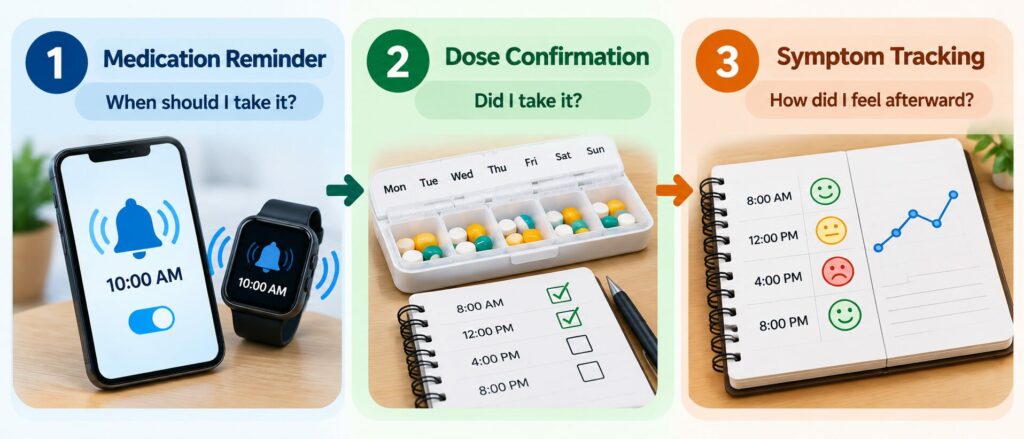
Remembering to take medication is important, but understanding how well it controls your symptoms can be just as valuable.
You might notice that your morning dose works well, while your afternoon symptoms return earlier than expected. Keeping a simple medication and symptom diary can help you recognize these patterns.
Try recording three things:
- Medication timing: When you actually took each dose.
- Symptoms: Changes in tremor, stiffness, slowness, or other symptoms.
- ON and OFF periods: When medication seems to be working well and when symptoms return.
You can use a notebook or a digital tool such as the Parkinson’s Daily Diary app to keep your medication and symptom records organized.
Over time, these records may help you have more informed conversations with your neurologist about how your treatment is working.
Remember, a symptom diary does not replace a medication reminder or tell you when to change your dose.
Key takeaway: Medication reminders help you follow your schedule, while a medication and symptom diary helps you understand how your symptoms change throughout the day.
Frequently asked questions about Parkinson’s medication reminders
1. What is the best medication reminder for someone with Parkinson’s disease?
It depends on individual needs. Phone alarms and pill organizers may be enough for simple schedules, while electronic reminders or automatic dispensers may help people taking several daily doses or needing caregiver support.
2. What should I do if I forget a Parkinson’s medication dose?
Follow the missed-dose instructions provided for your specific medication. If you’re unsure, contact your pharmacist or healthcare professional. Never double a dose to make up for a missed one unless specifically instructed.
3. Can an automatic pill dispenser prevent missed doses?
Automatic dispensers can help reduce forgotten doses by providing reminders and dispensing medication at scheduled times. However, they cannot guarantee that medication has been swallowed, and some people may still need caregiver assistance.
Conclusion: find a reminder that works for you
Managing Parkinson’s medication doesn’t have to involve complicated technology. Whether you choose a phone alarm, pill organizer, or automatic dispenser, the goal is to make your daily routine safer and easier.
Start with a system that matches your needs, record doses as you take them, and discuss ongoing medication difficulties with your healthcare team.
The best Parkinson’s medication reminder is one you can use confidently and consistently every day.
Medical disclaimer
This article is for educational and informational purposes only and is not a substitute for professional medical advice, diagnosis, or treatment. Parkinson’s medication schedules and individual needs vary. Always follow your neurologist’s or healthcare provider’s instructions, and never change medication doses or timing without medical guidance.
Medication reminders, pill organizers, and automatic dispensers may help with daily medication management, but they cannot guarantee that medications are taken correctly or prevent all medication errors. Consult your pharmacist or healthcare provider before using a new medication-management device, particularly if you have difficulty handling medications or remembering doses.
Related articles you may find helpful
Managing Parkinson’s medication involves more than remembering each dose. These additional guides may help you better understand medication timing, track symptoms, and prepare for medical appointments.
- The Ultimate Guide to Parkinson’s Pill Timing — Understand why medication timing matters and how it can affect symptom control.
- Parkinson’s Medication Management Diary — Explore a practical way to organize medication information and daily records.
- What to Do When Parkinson’s Medication Stops Working — Learn about changes in medication effectiveness and what to discuss with your neurologist.
- Best Ways to Track Parkinson’s Medication Effects and Side Effects — Discover ways to monitor treatment responses.
- How to Prepare for a Parkinson’s Appointment — Get practical tips and a free worksheet for your next consultation.
Track your Parkinson’s day in less than a minute
The Parkinson’s Daily Diary App lets you record symptoms, medication information and daily notes, and create a doctor-ready report in under a minute.