
Neuroscientist • Parkinson’s Researcher
Balance problems are one of the most challenging and anxiety-provoking symptoms of Parkinson’s disease. As balance declines, fear of falling often limits activity and independence. Learning how to improve balance in Parkinson’s disease using modern tools goes beyond traditional exercises — today’s technologies can enhance feedback, confidence, and safety in ways that weren’t possible just a few years ago.

In Parkinson’s disease, balance is affected not only by muscle weakness but by changes in sensory processing, posture, and automatic movement control. Traditional balance exercises remain important, but they are no longer the only option. New tools — ranging from wearable feedback devices to virtual and home-based systems — are helping people train balance more effectively and safely. This article explains how modern tools can help improve balance in Parkinson’s disease, with a practical, patient-focused approach
You’ll learn:
- Why balance problems occur in Parkinson’s disease
- How modern tools support balance training differently than traditional exercises
- Which technologies are most useful at home vs in therapy
- How tools can reduce fall risk and fear of falling
- What to consider before choosing a balance tool
The goal is not replacing therapy — but enhancing balance training with smarter, safer support.
Why balance is affected in Parkinson’s disease

Balance problems are a core feature of Parkinson’s disease, and they tend to worsen over time. Importantly, balance difficulties in Parkinson’s are not caused by a single issue. They result from several interacting changes in how the brain controls movement and posture.
Impaired postural reflexes
In healthy movement, the brain makes rapid, automatic adjustments to keep the body upright when we shift weight, turn, or are lightly bumped. In Parkinson’s disease, these automatic postural reflexes become slower and less effective.
As a result, recovering from small losses of balance takes longer, increasing the risk of falls — especially during turning, stopping, or sudden changes in direction.
Altered sensory integration
Balance depends on accurate information from vision, the inner ear, and proprioception (the sense of body position). Parkinson’s disease can reduce how effectively the brain integrates these signals.
Proprioceptive input from the feet and legs is often less reliable, making it harder to sense weight distribution and foot placement. This is why balance often worsens on uneven surfaces or in low-light environments.
Abnormal posture and trunk control
Postural changes are common in Parkinson’s disease. Forward-flexed posture, reduced trunk rotation, and stiffness in the hips and spine shift the center of gravity forward.
This reduces the margin for error during standing and walking. When posture is unstable, balance reactions must work harder — and in Parkinson’s disease, these reactions are often delayed or incomplete.
Increased cognitive load during movement
In Parkinson’s disease, movement becomes less automatic and more attention-dependent. Balance tasks that were once effortless now require conscious control.
When multitasking, navigating obstacles, or feeling rushed or anxious, cognitive load increases. This can overwhelm the system and lead to hesitation, freezing, or loss of balance — even in familiar environments.
Why this matters for balance training
Understanding these factors explains why balance training in Parkinson’s disease must go beyond strength alone. Effective approaches — especially modern tools — focus on enhancing sensory feedback, improving posture, and reducing cognitive load, not just building muscle.
Key takeaway
Balance problems in Parkinson’s disease are not caused by weakness alone.
They result from changes in postural reflexes, sensory processing, posture, and attention — which is why balance training must address how the brain controls movement, not just muscles.
In the next section, we’ll explore what is meant by “modern tools” for balance training and how they specifically address these challenges.
What “modern tools” mean in balance training for Parkinson’s disease

When we talk about modern tools to improve balance in Parkinson’s disease, we’re not referring to gadgets for their own sake. Modern tools are technologies designed to address the specific balance challenges seen in Parkinson’s — especially reduced sensory feedback, delayed postural responses, and increased fear of falling.
Unlike traditional balance exercises alone, these tools add feedback, structure, and safety, helping the brain relearn balance more effectively.
Feedback-based balance tools
One defining feature of modern balance tools is real-time feedback. This may include visual, auditory, or vibration cues that tell the user how their body is moving.
Because proprioceptive awareness is often reduced in Parkinson’s disease, feedback helps “fill in the gaps” by making body position and weight shifting more noticeable. This improves accuracy, confidence, and consistency during balance practice.
Technology-assisted rehabilitation
Modern tools often support task-specific balance training, rather than generic strengthening. This means practicing balance during realistic movements such as standing, stepping, turning, or shifting weight — the exact situations where falls tend to occur.
Technology-assisted systems allow these movements to be repeated safely, with gradual progression. This repetition is essential for motor learning in Parkinson’s disease, where automatic movement pathways are impaired.
Home-based vs clinic-based tools
Some modern balance tools are designed for clinical settings, guided by physiotherapists, while others are suitable for home use. Clinic-based tools often provide more advanced feedback and supervision, while home-based tools focus on consistency and accessibility.
Both have value. Clinic tools are especially helpful for assessment and early training, while home-based tools support ongoing practice — which is critical, since balance improvements require regular repetition over time.
Safety as a core design feature
A key difference between modern tools and traditional exercises is built-in safety. Many tools are designed to reduce fall risk by providing support, limiting movement ranges, or allowing training in seated or supported positions.
This safety aspect is crucial in Parkinson’s disease, where fear of falling can limit participation. When people feel safer, they are more willing to challenge their balance — and that challenge is necessary for improvement.
Why modern tools can be especially helpful in Parkinson’s disease
Modern balance tools are effective not because they replace therapy, but because they enhance how balance is trained. By improving feedback, reducing cognitive load, and supporting repetition, they target the core mechanisms that impair balance in Parkinson’s disease.
Key takeaway
Modern balance tools help people with Parkinson’s disease by improving feedback, safety, and confidence — making balance training more effective than exercises alone.
In the next section, we’ll explore one of the most promising categories in detail: wearable balance and feedback devices, and how they help people better sense and control their movement.
Get Your Free Parkinson’s Medication Management Diary
Download your free printable diary to easily track your medications, symptoms, and doses.
Wearable balance and feedback devices

Most wearable balance devices use small sensors to detect body position, sway, or movement patterns. When movement goes outside a target range, the device provides feedback — such as gentle vibration, sound, or visual cues via a connected app.
This feedback helps the brain recognize when balance is drifting off-center and encourages corrective movement before a loss of balance occurs. Over time, repeated exposure to this feedback can improve balance awareness and control.
Why feedback matters in Parkinson’s disease
In Parkinson’s disease, proprioceptive feedback — the sense of where your body is in space — is often impaired. People may feel upright even when they are leaning, or may not notice small balance shifts until it’s too late.
Wearable devices act as an external reference, making balance errors more noticeable. This reduces overcorrection and hesitation, two common contributors to instability and freezing.
Common types of wearable balance tools
Some wearable devices focus on postural alignment, alerting users when they lean too far forward or sideways. Others are designed to support gait and weight shifting, helping users maintain steadier walking patterns.
Smart insoles are another example. They provide information about foot pressure and weight distribution, which can be especially helpful for people who feel unsure about foot placement or balance during standing and walking.
Who benefits most from wearable devices
Wearable balance tools tend to be most helpful for people with:
- Mild to moderate balance impairment
- Reduced balance confidence or fear of falling
- Difficulty sensing posture or weight shift
- Ability to follow feedback cues
They are less effective when balance loss is severe or when cognitive load is very high, which is why proper assessment and guidance are important.
Important limitations to keep in mind
Wearable devices are training tools, not safety guarantees. They do not prevent falls on their own and should not replace mobility aids when those are needed. Feedback can also become overwhelming if it is too frequent or poorly calibrated. Used appropriately, however, wearable balance devices can significantly enhance balance training by making invisible balance errors visible.
Key takeaway
Wearable balance devices help people with Parkinson’s disease improve balance by making posture and movement feedback clearer — turning hidden balance errors into actionable information.
In the next section, we’ll look at virtual reality and interactive balance systems, which use visual environments and task-based challenges to further improve balance and engagement.
Virtual reality and interactive balance systems
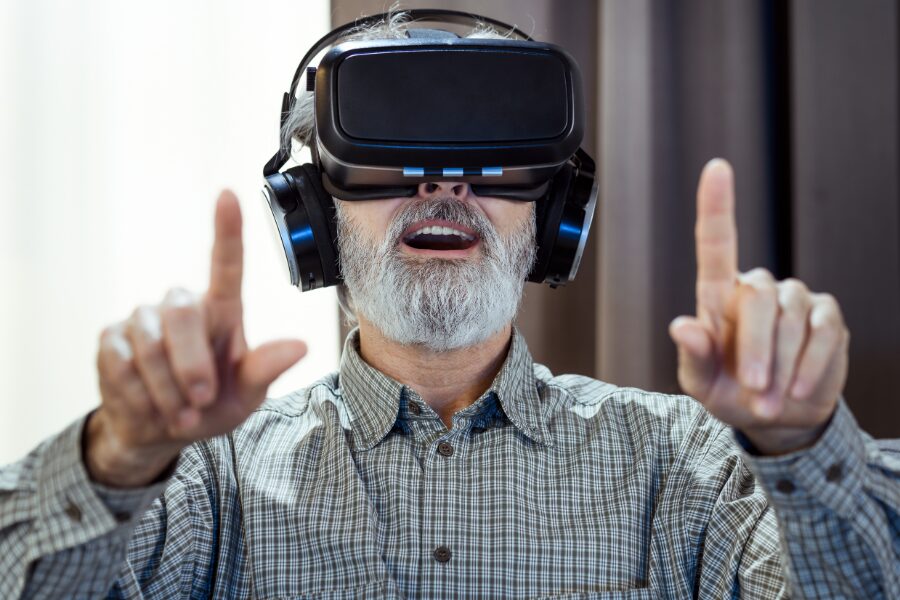
Virtual reality (VR) and interactive balance systems are increasingly used to help improve balance in Parkinson’s disease. These tools use screens, sensors, or immersive environments to turn balance training into task-based, engaging activities that closely resemble real-life movement challenges.
Their key strength lies in combining movement practice with meaningful visual feedback.
How interactive balance systems work
Most systems require the user to stand on a force-sensing platform or wear motion sensors while interacting with visual tasks displayed on a screen. These tasks may involve shifting weight, reaching, stepping, or responding to visual cues.
Rather than focusing on “exercise,” the brain is focused on completing a task, which reduces overthinking and supports more automatic movement — a major advantage in Parkinson’s disease.
Why virtual environments help balance
Parkinson’s disease reduces automatic movement control, making balance heavily attention-dependent. Interactive systems leverage this by directing attention outward, toward goals or visual targets, rather than inward toward the body.
This external focus has been shown to improve movement quality and stability. It also reduces fear of falling, because balance challenges are presented in a controlled, repeatable environment.
Engagement and motivation benefits
Another major benefit of interactive balance tools is engagement. Repetitive balance exercises can feel boring or frustrating, leading to poor adherence. Interactive systems introduce variation, progression, and feedback that encourage consistent participation.
For many people, this increased motivation leads to more frequent practice — which is critical, as balance improvements require regular repetition over time.
Clinic-based vs home-based systems
Some VR and interactive balance tools are used primarily in rehabilitation clinics, where supervision allows for higher-level challenges. Others are designed for home use, offering simpler interfaces and built-in safety limits.
Both can be effective. Clinic-based systems are ideal for assessment and early training, while home-based systems support long-term practice and maintenance.
Limitations and safety considerations
Virtual systems are not appropriate for everyone. Severe balance impairment, significant visual problems, or cognitive difficulties may limit their usefulness. Proper setup, supervision, and progression are essential to avoid frustration or unsafe situations.
When used appropriately, however, interactive balance systems can significantly enhance balance training by combining feedback, repetition, and confidence-building.
Key takeaway
Virtual and interactive balance systems help people with Parkinson’s disease improve balance by combining movement practice with engaging, task-focused feedback that supports confidence and consistency.
In the next section, we’ll look at assistive devices with smart features for improving balance.
Get Your Free Parkinson’s Medication Management Diary
Download your free printable diary to easily track your medications, symptoms, and doses.
Assistive devices with smart features
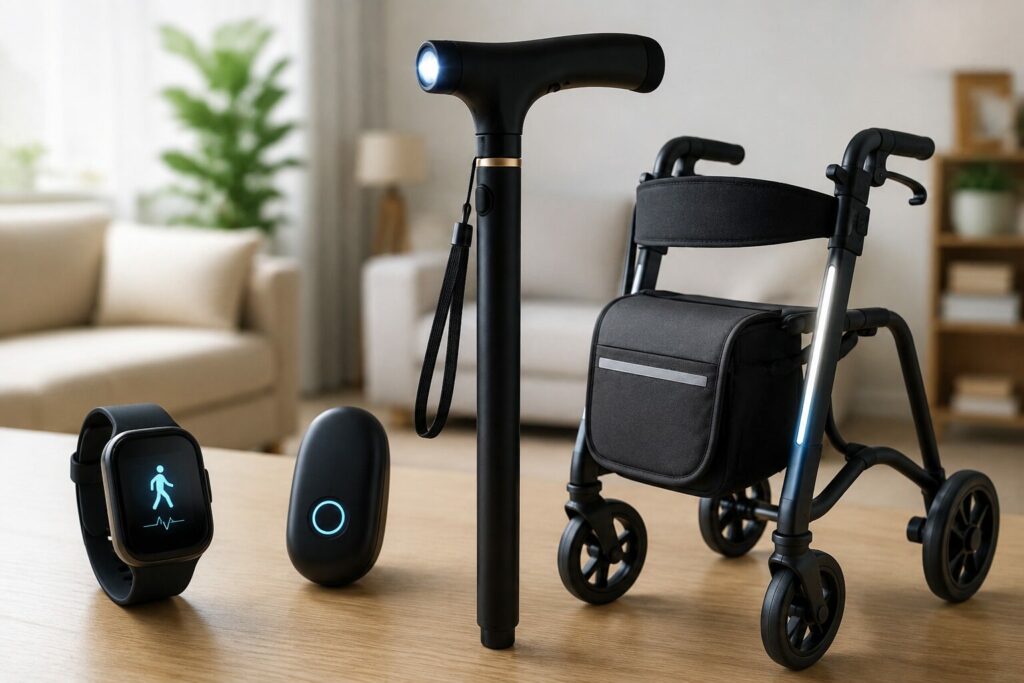
Assistive devices have long been used to support mobility in Parkinson’s disease, but newer models now include smart features that actively support balance rather than simply providing physical support.
These tools are especially useful for people who need extra stability but want to remain as mobile and independent as possible.
How smart assistive devices differ from traditional aids
Traditional canes and walkers provide passive support. Smart assistive devices, by contrast, incorporate features such as cueing systems, sensors, or feedback mechanisms that help guide movement and posture.
This distinction matters in Parkinson’s disease, where balance issues are often related to timing, initiation, and sensory processing — not just strength.
Cueing technologies that support balance
Some modern canes and walkers include visual or auditory cueing, such as laser lines projected onto the floor. These cues help regulate step length, improve timing, and reduce freezing of gait — all of which indirectly support balance.
By providing an external reference point, cueing reduces cognitive load and helps movement feel more automatic.
Stability and weight distribution features
Advanced walkers may include design elements that promote better weight distribution and posture, such as adjustable frames, braking systems, or posture-supporting handles.
These features help prevent forward leaning and sudden shifts in the center of gravity, which are common contributors to balance loss in Parkinson’s disease.
When smart assistive devices help most
Smart assistive devices are particularly helpful for people who:
- Experience frequent freezing or hesitation
- Feel unstable during walking or turning
- Have a history of falls
- Benefit from external visual or auditory cues
They are most effective when properly fitted and introduced with guidance from a physiotherapist or mobility specialist.
Important limitations to consider
Smart assistive devices are supports, not cures. Overreliance without proper training can sometimes reduce natural balance responses. It’s also important that devices are used consistently and adjusted correctly to avoid creating new movement habits that increase risk.
Used thoughtfully, however, smart assistive devices can significantly improve safety and confidence while walking.
Key takeaway
Smart assistive devices help improve balance in Parkinson’s disease by combining physical support with cueing and feedback — making walking safer and more predictable.
Practical takeaway for patients and caregivers
Improving balance in Parkinson’s disease is most effective when modern tools are used to support — not replace — movement practice. Technology works best when it enhances feedback, confidence, and consistency, rather than adding complexity or distraction.
For patients, the key is choosing tools that feel manageable and relevant to everyday challenges, such as standing, turning, or walking safely at home. Starting with simple tools and progressing gradually allows the brain to adapt without becoming overwhelmed.
For caregivers, support comes from observation and encouragement rather than control. Helping set up safe practice environments, ensuring tools are used correctly, and noticing patterns of improvement or difficulty can make a meaningful difference.
Most importantly, balance training is not about eliminating all risk. It’s about reducing fall risk while maintaining independence and confidence. When modern tools are selected thoughtfully and used consistently, they can play a valuable role in helping people with Parkinson’s disease move more safely and confidently.
Disclaimer: The information shared here should not be taken as medical advice. The opinions presented here are not intended to treat any health conditions. For your specific medical problem, consult with your healthcare provider.
Track your Parkinson’s day in less than a minute
The Parkinson’s Daily Diary App lets you record symptoms, medications, daily notes and doctor ready report in under a minute.