

Christmas is approaching, and finding the right gift for someone living with Parkinson’s disease can take a little extra thought. The best presents aren’t necessarily the most expensive. They’re the ones that make everyday activities easier, bring comfort, or help someone enjoy the things they love.
For Christmas 2026, we’ve brought together 10 thoughtful and practical gift ideas for people with Parkinson’s, from adaptive eating utensils and comfortable footwear to helpful technology and meaningful gifts that keep families connected.
Each idea includes practical features to look for, research insights where available, and suggestions to help you choose something that suits your loved one’s individual needs.
Remember: Parkinson’s affects everyone differently. A gift that works well for one person may not be suitable for another. Whenever possible, ask about their preferences before buying.
''Affiliate Disclosure: This page contains affiliate links, and while it may not cost you anything extra, if you make a purchase through these links, We’ll earn a small commission''.
🎁 Quick Gift Finder: 10 Thoughtful Ideas at a Glance
Short on time? Scan this festive list first — full details, research insights, and Amazon examples are below.
1. Adaptive Weighted Utensils
To make everyday meals easier and more comfortable.

For people living with Parkinson’s disease, tremors, stiffness, and reduced hand control can make eating challenging. Adaptive utensils, such as spoons and forks with thicker, textured, or specially designed handles, may help make mealtimes more manageable.
What does research say?
A 2025 study involving people with Parkinson’s found that many experienced difficulties using ordinary cutlery, particularly spills and poor grip stability. Participants generally preferred utensils with textured handles, deeper spoon bowls, and moderate weight.
More recently, a 2026 study evaluated an adaptive cutlery prototype in 13 people with Parkinson’s. Researchers reported improvements in eating-task performance, including more effective food transfer and better user satisfaction.
Although encouraging, these findings come from a small study of a specific prototype. They do not mean that every weighted utensil will work equally well.
What to look for:
- Thick, non-slip handles that are comfortable to hold.
- A weight that feels manageable rather than tiring the hand.
- Deeper spoon bowls to help reduce spills.
- Angled handles if wrist movement is limited.
- Easy-to-clean, dishwasher-safe materials.
Gift examples:
- BaseSmall 4-Piece Adaptive Utensils Set
- Greenants Adaptive Weighted Utensils
- Shop Square Stainless Steel Weighted Utensils
- Washenbed Thick Solid Weighted Utensils
Gift idea tip: Pair a set of adaptive utensils with a festive placemat or napkin. If possible, let the recipient try different handle designs and weights before choosing.
Remember: Heavier utensils are not always better. Someone with weakness or fatigue may find lightweight, built-up handles more comfortable.
2. Slip-On Adaptive Walking Shoes
To make getting dressed easier and walking more comfortable.
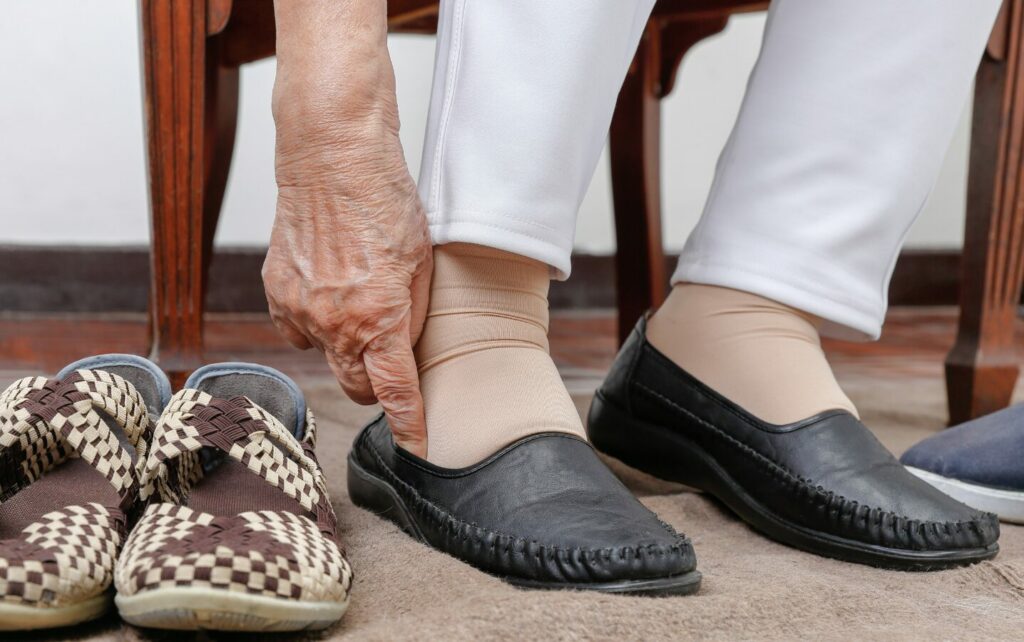
For someone living with Parkinson’s disease, putting on shoes can become surprisingly difficult. Stiffness, tremor, reduced hand coordination, and difficulty bending down may make tying shoelaces or adjusting footwear frustrating.
Slip-on adaptive shoes or shoes with Velcro closures can make everyday dressing easier. They may be particularly helpful for people who struggle with fine hand movements or need extra time to get ready.
However, not all slip-on shoes provide the same level of support. Choosing the right fit and design is especially important for someone experiencing balance problems or freezing of gait.
What does research say?
A 2020 study published in Scientific Reports examined different footwear types in 30 people with a history of falls. Researchers found that minimalist shoes performed better than conventional shoes on certain measures of balance and mobility.
However, the study did not specifically investigate Parkinson’s disease or adaptive slip-on shoes. It also did not demonstrate that these shoes prevent falls.
For people with Parkinson’s, the practical priority is to choose footwear that is easy to put on, fits securely, and feels stable during walking.
What to look for:
- Easy fastening: Velcro closures, elastic laces, or hands-free designs.
- Secure heel support: Shoes that stay firmly on the feet without slipping off.
- Low, stable soles: Avoid high heels or excessively thick, unstable soles.
- Appropriate traction: Soles that provide grip without catching excessively on the floor.
- Comfortable fit: Enough room for the toes without allowing the foot to slide inside the shoe.
Gift examples:
- Silverts Adaptive Shoes
- Kizik Slip On Sneakers
- FitVille Extra Wide Walking Shoes
- Orthofeet Orthopedic Knit Lava Sneakers
Gift idea tip: Consider pairing adaptive shoes with a long-handled shoehorn. It can make putting on shoes easier without requiring as much bending.
Important: If the recipient experiences frequent falls, freezing of gait, or significant walking difficulties, ask their physiotherapist or occupational therapist for footwear advice before purchasing.
3. Parkinson’s Management Diary
To make it easier to track symptoms, medications, and everyday changes.

Living with Parkinson’s disease can be unpredictable. Tremor, stiffness, fatigue, sleep difficulties, and medication responses may change throughout the day. Remembering these details during a doctor’s appointment can be challenging.
A Parkinson’s diary can be a thoughtful and practical gift. It provides a simple way to record daily symptoms, medication times, and important observations without relying entirely on memory.
What does research say?
Research on digital self-tracking in Parkinson’s disease has explored how people record symptoms, medication experiences, and changes in their daily lives.
Self-tracking may help people recognize patterns, remember important events, and prepare more specific questions for their healthcare professionals. However, keeping a diary has not been conclusively shown to improve medication adherence or clinical outcomes on its own.
The real value lies in making everyday experiences easier to document and discuss with a healthcare professional.
What to look for:
- Simple daily entries: A diary that takes only a few minutes to complete.
- Symptom tracking: Space to record tremor, stiffness, fatigue, pain, or other symptoms.
- Medication records: An easy way to note medication times and possible wearing-off periods.
- Room for personal notes: Space to record questions, concerns, or meaningful daily experiences.
- Doctor-friendly summaries: A format that makes information easier to review during appointments.
Paper or digital diary?
A paper diary may suit someone who prefers handwriting or does not regularly use a smartphone.
A digital diary may be more convenient for someone who wants to record symptoms quickly and review changes over time.
For example, our free Parkinson’s Daily Diary app allows users to record symptoms, medication information, and daily notes, with summaries that can be shared during medical appointments.
We have also created a collection of Parkinson’s diaries and tracking resources. Explore our diary collection.
Gift idea tip: Pair a paper diary with a comfortable, easy-grip pen. For someone who prefers digital tools, help them set up a tracking app and show them how to complete their first daily entry.
Remember: A diary should make life easier, not become another demanding task. Even a few brief notes about important symptoms or medication changes can be useful.
4. Non-Slip Socks and Adaptive Slippers
For warmth, comfort, and more secure movement around the home.

For someone living with Parkinson’s disease, walking around the house can sometimes be challenging, particularly when stiffness, balance difficulties, or freezing of gait affects movement.
Comfortable non-slip socks or well-fitting adaptive slippers can make a thoughtful Christmas gift. However, choosing the right footwear is important, especially for someone at risk of falling.
What do experts recommend?
The Parkinson’s Foundation recommends non-skid socks instead of loose bathroom slippers, which may slide off the feet. Supportive, secure-fitting footwear may be preferable for people who have significant walking or balance difficulties.
What to look for:
- Non-slip grips that provide traction on indoor surfaces.
- Comfortable socks without tight elastic bands.
- Slippers with secure heel support and adjustable closures.
- Low, stable soles that do not easily catch on flooring.
- Wide openings that make dressing easier.
Recommended Gift: Silverts Non-Slip Socks and Adaptive Slippers
Silverts offers adaptive footwear designed for people who need extra comfort or assistance with dressing. Its range includes non-skid grip socks and slippers with adjustable, easy-close fastenings.
Two options worth considering are:
- Non-Skid Grip Socks: A simple, affordable gift for someone who prefers socks indoors.
- Easy-Close Adaptive Slippers: An option for someone who finds conventional slippers difficult to put on or adjust.
Explore Silverts Non-Slip Socks and Slippers
Gift idea tip: Pair non-slip socks with a warm blanket for a cozy Christmas gift. If choosing slippers, check the recipient’s size, walking needs, and preferred fastening style before ordering.
Important: Non-slip socks and adaptive slippers are not guaranteed to prevent falls. People with frequent falls or freezing of gait may benefit from individualized footwear advice from a physiotherapist or occupational therapist.
5. Weighted Blanket or Handheld Massager
For comfort, relaxation, and peaceful evenings.

Muscle stiffness, discomfort, and sleep difficulties are common in Parkinson’s disease. A weighted blanket or lightweight handheld massager may be a thoughtful Christmas gift for someone who enjoys relaxing at home.
However, these products are best considered comfort aids rather than treatments for Parkinson’s symptoms.
What does research say?
A 2024 review published in Frontiers in Psychiatry examined the effects of weighted blankets on sleep and related difficulties across different populations.
The researchers reported promising findings for sleep quality and emotional well-being. However, the evidence was mixed in quality, and more rigorous studies are needed.
Importantly, the review did not establish that weighted blankets improve Parkinson’s-related insomnia, stiffness, or fatigue.
There is also insufficient Parkinson’s-specific evidence to recommend handheld massagers as treatments for muscle rigidity, although some people may find gentle massage relaxing.
What to look for:
- Manageable blanket weight: Choose a blanket the recipient can easily move, adjust, and remove independently.
- Breathable materials: Soft, comfortable fabrics that do not cause overheating.
- Easy cleaning: A removable, washable cover can make maintenance simpler.
- Lightweight massager: An ergonomic handle that is comfortable to hold despite tremor or stiffness.
- Adjustable intensity: Gentle massage settings rather than excessively strong vibration.
Gift examples:
Gift idea tip: Create a cozy Christmas gift package with a comfortable blanket and a favorite book or audiobook. If choosing a massager, consider whether the recipient can comfortably operate it.
Important: Weighted blankets may be unsuitable for people with significant mobility limitations, breathing difficulties, or difficulty removing the blanket independently. Consult a healthcare professional when uncertain. Avoid using massage devices over painful, swollen, injured, or medically sensitive areas.
6. Smart Speaker or Voice-Activated Display
For hands-free convenience, helpful reminders, and staying connected.

For someone living with Parkinson’s disease, everyday tasks such as setting reminders, making phone calls, or controlling household devices can sometimes become difficult because of tremor, stiffness, or reduced hand coordination.
A smart speaker or voice-activated display can be a thoughtful Christmas gift, allowing certain tasks to be completed using simple spoken commands instead of buttons or touchscreens.
Devices such as the Amazon Echo Show and Google Nest Hub can help with everyday routines, including setting medication reminders, playing music, checking the weather, and controlling compatible smart-home devices.
What does research say?
A 2021 study published in JMIR Rehabilitation and Assistive Technologies surveyed 290 people with Parkinson’s disease about their experiences with voice-assisted technology.
Researchers found that approximately 71% of participants owned a voice-assisted device. Among those who used these devices regularly, about 31% reported using them specifically for Parkinson’s-related needs.
The findings suggest that voice assistants may be useful and acceptable to some people with Parkinson’s. However, the study did not establish improvements in medication adherence or clinical outcomes.
What to look for:
- Reliable voice recognition: A microphone that can recognize softer or slower speech.
- Simple reminders: Easy-to-set alarms for medication times and daily activities.
- Accessible controls: A clear display or simple physical controls as alternatives to voice commands.
- Communication features: Options for hands-free calling or video calls, depending on the device.
- Easy setup: A device that family members can help configure and maintain.
Gift examples:
Gift idea tip: Set up the device before Christmas, add a favorite music playlist, and create a few useful reminders. This makes the gift immediately practical rather than another piece of technology the recipient needs to configure.
Important: Some people with Parkinson’s experience a softer voice or unclear speech, which can make voice recognition unreliable. If possible, test the device with the recipient before purchasing. Voice reminders should supplement, not replace, a reliable medication-management routine.
7. E-Reader or Audiobook Subscription
For enjoying favorite books without the difficulty of holding or turning pages.

Reading can be a wonderful way to relax, learn something new, or enjoy a good story. However, for someone living with Parkinson’s disease, tremor, stiffness, fatigue, or visual difficulties may make holding a heavy book, turning pages, or reading small print more challenging.
An e-reader or audiobook subscription can make reading more comfortable and accessible, allowing someone to continue enjoying their favorite books in a way that suits their needs.
Why can this be a helpful gift?
E-readers allow readers to increase the font size, adjust screen brightness, and enjoy books on a lightweight device. Some also offer accessibility features that reduce the need for frequent touchscreen interactions.
Audiobooks provide another option, especially for someone who finds holding books tiring or prefers listening while resting.
Although reading is an enjoyable and mentally engaging activity, there is currently insufficient evidence to conclude that audiobooks specifically improve cognitive function or slow cognitive decline in people with Parkinson’s disease.
What to look for:
- Adjustable font size: Larger text for easier reading.
- Lightweight design: Comfortable to hold or place on a stand.
- Glare-free display: An e-ink screen with adjustable lighting.
- Hands-free listening: Audiobooks that can be played through a speaker or headphones.
- Simple controls: Easy navigation, adjustable playback speed, and bookmarking.
Gift examples:
- Amazon Kindle Paperwhite
- Audible Subscription
Gift idea tip: Make the gift personal by adding a few favorite books or choosing an audiobook by an author the recipient already enjoys. For an e-reader, consider including a stand so they can read without holding the device.
Remember: The best option depends on personal preferences. Some people enjoy reading on a screen, while others prefer listening. If the recipient experiences hearing difficulties, an e-reader may be the more comfortable choice.
8. Adaptive Clothing and Dressing Tools
To make getting dressed easier, more comfortable, and less frustrating.

For someone living with Parkinson’s disease, simple tasks such as buttoning a shirt, pulling up a zipper, or putting on trousers can become difficult. Tremor, stiffness, and slower movements may turn dressing into a time-consuming activity.
Adaptive clothing and dressing tools can make a thoughtful Christmas gift by reducing the need for complicated fasteners and making everyday routines more manageable.
What do experts recommend?
The Parkinson’s Foundation recommends practical clothing adaptations, including elastic waistbands, Velcro or magnetic closures, and dressing aids such as button hooks, zipper pulls, and long-handled shoehorns.
These adaptations may make dressing easier, although their effectiveness depends on the person’s symptoms and abilities.
What to look for:
- Easy fastenings: Magnetic buttons, Velcro closures, or large zipper pulls.
- Elastic waistbands: Trousers that are easier to pull up and adjust.
- Comfortable fabrics: Soft, breathable, slightly stretchy materials.
- Practical dressing tools: Button hooks, dressing sticks, or long-handled shoehorns.
- Personal style: Clothing that looks and feels like something the recipient would normally enjoy wearing.
Recommended Gift: Silverts Adaptive Clothing
Silverts offers adaptive clothing designed for people who have difficulty dressing independently or need assistance from a caregiver.
Its clothing range includes shirts with magnetic closures, easy-touch fastenings, trousers with elastic waistbands, and garments designed for assisted dressing.
Two options worth considering are:
- Adaptive Shirts: Shirts with magnetic or easy-touch closures that can reduce the need to manipulate small buttons.
- Easy-Dressing Trousers: Comfortable trousers with elastic waistbands or accessible openings that may simplify dressing.
Explore Silverts Adaptive Clothing
Gift idea tip: Choose clothing in the recipient’s favorite color or style. A comfortable adaptive shirt or cardigan can be both practical and personal, making it feel like a Christmas present rather than medical equipment.
Important: Magnetic closures may be unsuitable for some people with implanted medical devices, including certain pacemakers or deep brain stimulation systems. Check the garment manufacturer’s warnings and the implanted-device manufacturer’s guidance before purchasing.
9. Gentle Exercise or Movement Gift
To encourage enjoyable movement, strength, and confidence.

Regular physical activity is an important part of living well with Parkinson’s disease. Exercise can help improve mobility, muscle strength, balance, and overall well-being.
A thoughtful Christmas gift might be a set of resistance bands, a portable pedal exerciser, a yoga mat, or access to a Parkinson’s-specific exercise class. The goal isn’t to push someone to exercise harder, but to help them enjoy movement that suits their abilities.
What does research say?
Clinical guidelines from the American Physical Therapy Association support aerobic exercise, resistance training, and balance training for improving motor symptoms and physical function in people with Parkinson’s disease.
The Parkinson’s Foundation’s updated exercise guidelines also recommend a combination of aerobic activity, strength training, flexibility, and balance exercises, tailored to individual abilities.
Although exercise offers important benefits, it has not been conclusively established that these particular gift products slow the underlying progression of Parkinson’s disease.
What to look for:
- Low-impact equipment: A pedal exerciser or yoga mat for comfortable movement.
- Light resistance tools: Resistance bands that can be used for appropriate strengthening exercises.
- Parkinson’s-specific programs: Online or local classes led by qualified instructors.
- Easy-to-use designs: Equipment that is simple to set up and store.
- Personal preferences: Activities the recipient enjoys and feels motivated to continue.
Gift examples:
- NISDOKR DeskCycle Under Desk Exercise Bike
- Geftnest Chair Yoga Cards for Seniors
- Fitbeast Grip Strength Trainer Kit
- The Complete Fitness Guide for Parkinson’s
Gift idea tip: Pair a resistance band set or exercise book with a personal note: “Here’s to finding movement you enjoy in the new year.” Better still, consider gifting a class or activity you can enjoy together.
Important: Exercise equipment should match the person’s mobility, balance, and physical abilities. People experiencing frequent falls, freezing of gait, dizziness, or significant movement difficulties should seek advice from a Parkinson’s-specialist physiotherapist before starting unfamiliar exercises.
10. Digital Photo Frame
To bring family memories and familiar faces into everyday life.

Christmas is a time for family, connection, and sharing meaningful moments. For someone living with Parkinson’s disease, especially if family members live far away, a digital photo frame can be a thoughtful and personal gift.
Unlike traditional picture frames, a Wi-Fi-enabled digital photo frame can display hundreds of photographs and allow family members to send new pictures remotely.
Imagine a grandparent waking up to a new photograph of their grandchildren, a family celebration, or a favorite holiday memory. It’s a simple way to share everyday moments, even when loved ones cannot visit in person.
Why can this be a meaningful gift?
Digital photo frames offer an easy way to enjoy familiar faces and cherished memories without needing to use a smartphone or computer.
For someone who experiences tremor, stiffness, or difficulty navigating technology, an automatically updating frame may be especially convenient.
Although sharing photographs can be a meaningful way to maintain family connections, there is currently insufficient Parkinson’s-specific evidence to conclude that digital photo frames reduce loneliness or improve mental health.
What to look for:
- Remote photo sharing: A Wi-Fi-enabled frame that allows family members to upload photos from their phones.
- Clear display: A bright screen with good viewing angles and adjustable brightness.
- Automatic slideshow: Photos that change without requiring touchscreen interaction.
- Simple setup: Easy installation and minimal ongoing maintenance.
- Privacy controls: Secure photo sharing with approved family members.
- No unnecessary subscription: Check whether basic photo-sharing features require ongoing payments.
Gift examples:
Gift idea tip: Before wrapping the frame, upload 20–30 meaningful photographs, including family celebrations, holidays, and everyday moments. Invite close family members to contribute new pictures throughout the year.
Remember: A digital photo frame is a way to share memories, not a replacement for personal visits, conversations, or regular family contact.
Frequently Asked Questions
Choosing a Christmas gift for someone with Parkinson’s can raise a few questions. Here are some practical answers to help you find something thoughtful and suitable.
What is the best Christmas gift for someone with Parkinson’s disease?
The best gift depends on the person’s symptoms, interests, and daily needs. Adaptive utensils, easy-to-wear clothing, comfortable footwear, and voice-activated devices can be practical choices. However, personal gifts such as family photographs, books, or shared experiences may be just as meaningful. Choose something that supports independence or brings joy.
What should you avoid buying for someone with Parkinson’s?
Avoid gifts that are difficult to operate, heavy to carry, or potentially unsafe for someone with balance or movement difficulties. Examples include complicated electronic devices, loose slippers, and exercise equipment requiring good balance. Also, avoid assuming that everyone with Parkinson’s needs medical or assistive products. Personal preferences matter.
Are weighted blankets good for people with Parkinson’s?
Some people may find weighted blankets comforting or relaxing, but there is insufficient evidence that they improve Parkinson’s-related sleep problems or stiffness. They may be unsuitable for people with limited mobility or difficulty removing the blanket independently. Consider individual comfort and safety before purchasing.
What are some affordable Christmas gifts for Parkinson’s patients?
Thoughtful gifts don’t have to be expensive. Non-slip socks, easy-grip pens, audiobooks, a simple symptom diary, or a long-handled shoehorn can be affordable options. You could also prepare a personalized photo album, offer help with a favorite activity, or plan a relaxing afternoon together.
Are technology gifts suitable for people with Parkinson’s disease?
Yes, depending on the person’s comfort with technology. Smart speakers, digital photo frames, and e-readers may make certain activities easier or more enjoyable. Look for simple controls, clear displays, and minimal setup requirements. Softer speech, tremor, or cognitive difficulties may affect how easily someone can use certain devices.
How can I make Christmas more enjoyable for someone with Parkinson’s?
Focus on comfort, flexibility, and meaningful time together. Plan activities around the person’s energy levels and medication routine, allow time for rest, and avoid overcrowded schedules. Ask what they would enjoy rather than making assumptions. Sometimes, a quiet family gathering or help with Christmas preparations can be more valuable than a physical gift.
Final Thoughts: The Best Christmas Gift Is One That Feels Personal
Choosing a Christmas gift for someone with Parkinson’s disease doesn’t have to be complicated. Sometimes, the most meaningful presents are those that make everyday activities a little easier, bring comfort, or simply create moments of happiness.
Whether it’s adaptive clothing, a helpful daily diary, a favorite audiobook, or a digital photo frame filled with family memories, the best gift is one that reflects the person’s individual needs and interests.
And remember, not every gift needs to be something you buy. Spending time together, helping with Christmas preparations, or simply being there to listen can be just as valuable.
This Christmas, focus on what brings your loved one comfort, independence, and joy.
Wishing you and your family a peaceful and wonderful Christmas 2026.
— Parkinson’s Viewpoint
Disclaimer: The information shared here should not be taken as medical advice. The opinions presented here are not intended to treat any health conditions. For your specific medical problem, consult with your healthcare provider.